Editor's Note: We received feedback after our recent posts about Driggs and Victor's urban renewal districts that some people had no idea what an urban renewal agency was, or how it worked, or what it did. So we put this piece together explaining the current Idaho law and local situation.
An urban renewal agency is a public body a city or county creates under Idaho law to pay for streets, utilities and other public works in a defined area. Under current law, for up to 20 years, it keeps much of the property tax collected on rising taxable value within its district and spends it on projects listed in a plan the city or county approved. Victor and Driggs each have one.
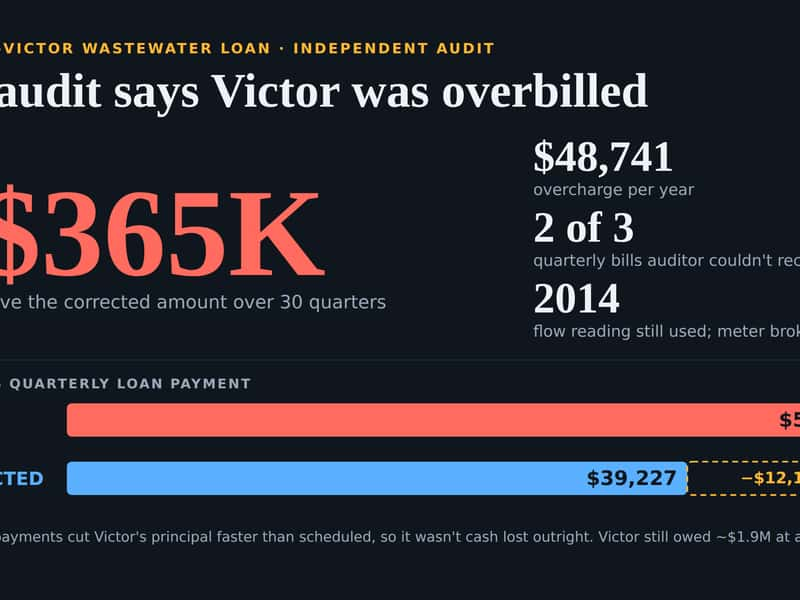
Victor's agency received $98,252 in tax increment in the fiscal year that ended Sept. 30, 2025, its annual report shows. Its preliminary budget for the fiscal year that began Oct. 1 projected $205,000, with $95,000 from its north district. The Idaho State Tax Commission estimated that urban renewal agencies statewide received $76,079,249 in 2023, about 3.4% of all the property taxes Idahoans paid that year. Agencies in Teton County received $247,079 of that.
When a city or county adopts an urban renewal plan, the district's base is the taxable value of its property as of Jan. 1 that year. Any taxable value the district gains above that base is called the increment. Property owners inside the district pay the same levy rates as owners outside it in the same taxing districts. The tax on the base goes to the county, the school district and the other taxing districts, as it did before. The tax on the increment goes to the agency instead.
Meghan Conrad, an attorney with the Boise firm Elam & Burke, walked the Driggs Urban Renewal Agency board through the mechanics on Oct. 7. Increment "is not only new taxable development, but it also captures the inflationary increases that occur within the district as well," she said.
The increment excludes bonds and school levy overrides voters have approved since 2008. The increment excludes highway district levies for districts formed or expanded since mid-2020, unless the city maintains its own roads or the highway district agrees. Under House Bill 436, passed in 2025, fire and ambulance districts stay out of any district created or changed after July 1, 2025, unless they consent, and they may withdraw from an older one whose debts allow it. Victor's agency began negotiating to help buy a fire engine after Teton County Fire & Rescue gained that power.
An urban renewal district does not add a tax, and it does not raise any taxing district's budget, which state law caps. Taxing districts set most levy rates against taxable value that leaves out the increment, so each rate comes out higher than it would if the increment counted. The Tax Commission's 2026 training for county officials works an example: a district with a $1 million budget and $100 million in base value sets a rate of 0.01, and that rate applied to $25 million in increment sends $250,000 to the agency. "Total property tax raised is $1,250,000 even though levy rate was set to raise $1,000,000," the training says.
Boise's urban renewal agency, Capital City Development Corp., says on its website that "property taxes are not increased when an urban renewal district is formed," and that "the tax levy rate may rise slightly (perhaps insignificantly) for all property owners in a county." The Canyon County Assessor's office says urban renewal "causes levy rates to increase at a faster rate or in some cases not decrease as much as it would have otherwise," and that "this affects all properties, regardless of whether they are in an urban renewal district."