Teton Creek Resort Settlement Costs Teton County $3 Million
The Teton Creek Resort settlement costs Teton County $3 million after commissioners blocked a development approved 30 years ago. Taxpayers cover the tab.
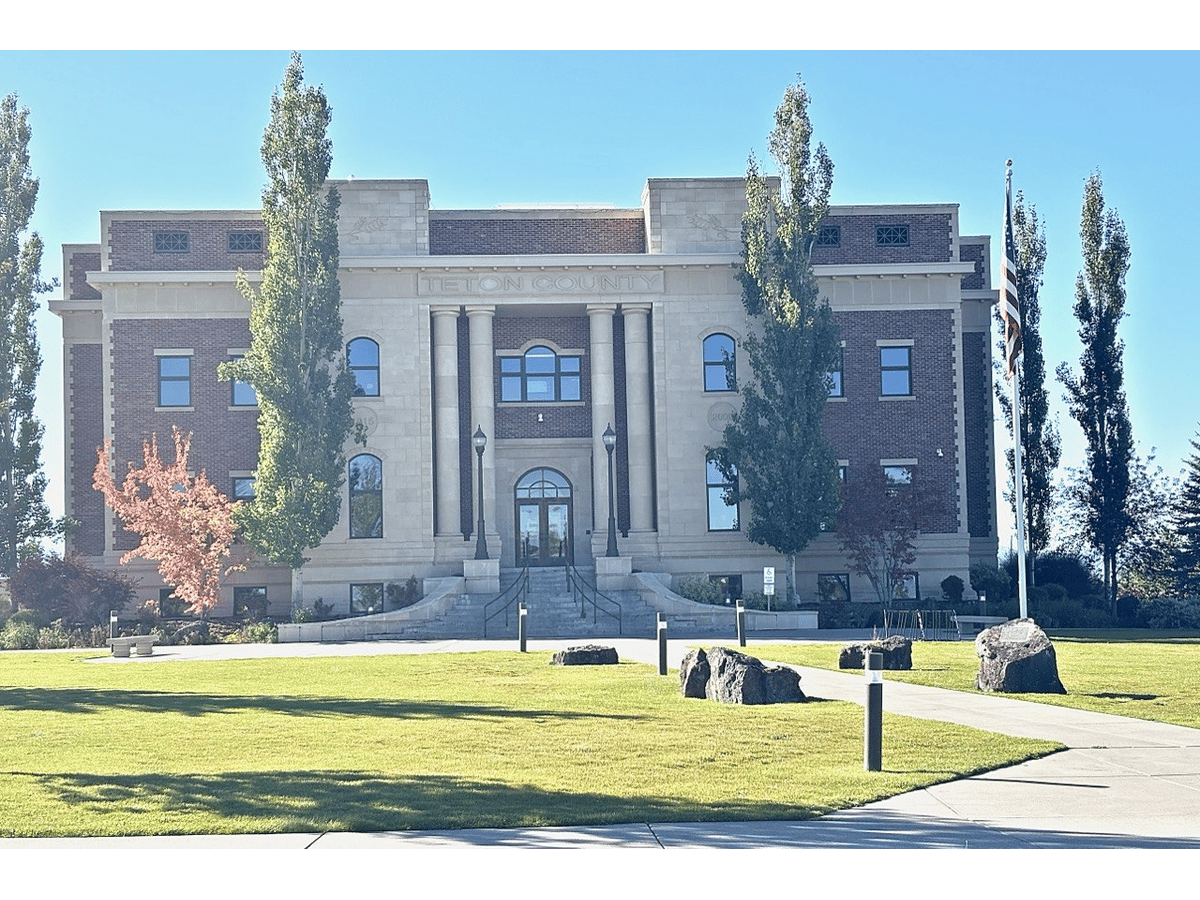
DRIGGS, Idaho — The Teton Creek Resort settlement approved Monday will cost Teton County $3 million. The county faced a $19 million judgment. The current Board of County Commissioners negotiated it down.
The settlement agreement, approved unanimously after a public hearing that drew effectively zero public comments, resolves two lawsuits stemming from a 2020 decision by former Commissioners Bob Heneage and Cindy Riegel to block a developer from building on land the county itself had already approved for development. Six years of litigation followed. The county lost at every level of the Idaho court system.
Commission Chair Brad Wolfe confirmed the Teton Creek Resort settlement resolves both pending cases. All three current commissioners, Wolfe, Ron James, and Dan Powers, said they were glad to have it resolved. The clerk confirmed the payment will come from the General Fund, where "money has been set aside for this".
Sources say the county's exposure in a damages trial reached $19 million. The current commission negotiated that down to $3 million. But the bill still lands on taxpayers, and the people who created the liability left office in January 2025.
Both Heneage and Riegel are no longer county commissioners.
How we got here: a 30-year saga
Teton Creek Resort was a legal, approved development, and had been for 30 years.
The Planned Unit Development (PUD) was platted and approved by Teton County in 1995, one of the first large-scale developments in the valley. It included plans for hundreds of homes, condominiums, lodge units, and commercial buildings on both sides of Ski Hill Road west of Stateline (Teton Valley News, Oct. 2020). Local environmental groups sued to stop it. The result was a 1996 Settlement Agreement, recorded as Instrument Number 126230 in the records of Teton County (Settlement Agreement, Recital B), in which all parties, the county, the developer, and three activist organizations, agreed to never "raise any claim or objection of any manner whatsoever" to the development of Teton Creek Resort.
That agreement was a recorded legal document with the force of a contract.
The site sits on Ski Hill Road at Stateline, the only road to Grand Targhee Resort and one of the county's most-traveled tourism corridors. The approved PUD includes condominiums, a lodge, a hotel, retail, restaurants, and commercial space. Fully built, it would generate property tax revenue, lodging tax revenue, and construction jobs. Instead, much of it has sat undeveloped for three decades.
The original developer went bankrupt. In 2014, Harry Statter's TCR, LLC purchased the property from a bankruptcy trustee. The development rights came with it. Statter moved forward with building what the county had already authorized.
The previous commission blocked it
In 2018 and 2019, TCR filed plat amendments to develop Lot 12B, 16 standalone condominiums. The county's own Planning Administrator, Gary Armstrong, reviewed each application and classified them as routine insignificant amendments. Armstrong's staff report stated that all 17 original conditions of approval from 1995 had been satisfied: "[S]ince the Final Plat was approved and recorded, November 13, 1995 … the 17 conditions of approval have been met," Armstrong wrote. The Planning and Zoning Commission and the Board both approved the amended applications.
Then, in 2020, when TCR submitted the condominium plat for recording, a procedural step required before building permits could be issued, the county reversed course. The Board tabled the discussion in August 2020 until it could get a legal opinion from County Attorney Billie Siddoway. On August 27, Siddoway emailed TCR's counsel advising that the county would not approve the condominium plat because TCR had not submitted final site plans, architectural designs, or landscape drawings, calling submission of those documents "a condition precedent to receiving approval."
With that legal opinion in hand, Heneage and Riegel voted 2-1 to deny the plat amendment. Commissioner Harley Wilcox cast the lone dissenting vote, siding with the county's own planning staff. Every court that reviewed the question confirmed Wilcox was right.
Siddoway stepped down from the prosecutor's race weeks later and left the prosecutor's office in January 2021. She is now Teton County's administrator. The official whose legal opinion launched six years of losing litigation now oversees the county operations and budget from which the $2 million payment will be drawn. When The Valley Signal raised this connection with the current commission, the response was that Siddoway had been swayed by the commissioners at the time.
The county escalated and kept losing
The previous commission went further. In April 2022, the county revoked 15 active building permits for Lot 12B that had already been issued, determining the permits had been "erroneously approved" and issuing stop-work notices on active construction.
TCR now had two lawsuits pending: one in Teton County District Court (Case No. CV41-20-0281) and one in U.S. District Court for the District of Idaho (Case No. 4:22-cv-00268, filed June 2022). The county was fighting on two fronts, paying attorneys on both fronts, and defending a position its own staff had contradicted.
The Idaho Supreme Court issued its first opinion in February 2024. The ruling was clear: the county had violated the Idaho Condominium Property Act by refusing to record the plat, the commissioners had no valid reason for the denial, and the lower court had erred in ruling for the county on TCR's breach-of-contract claim. The Supreme Court found genuine issues of material fact about whether the county broke the 1996 settlement agreement, meaning a damages trial was next.
The county requested a rehearing. The Supreme Court granted it (rehearings are uncommon) and ruled for TCR again in November 2024. The developer had prevailed at every level of the state court system. The remaining question was how much the county would pay.
The new commission cleaned it up
Wolfe and James took office in January 2025; Powers was appointed in May 2025. All three walked into a legal disaster they did not create. TCR had won every round. A damages trial was coming. Sources familiar with the negotiations put the potential exposure at $19 million.
The current commission negotiated the Teton Creek Resort settlement down to $3 million, roughly 84% less than the worst-case scenario. The agreement, approved Monday, includes:
$2 million in cash, payable within five business days (Section 2.03).
$1 million in fee credits toward county fees associated with developing the PUD, including application fees, permitting, inspections, and fees owed to the Teton County Regional Land Trust under the 1996 agreement. The credits cannot be used for water and sewer hookups to the City of Driggs. (Section 2.01)
Binding land-use definitions that override Teton County Code wherever they conflict (Section 3.02). Lodge Unit Lots can include condominiums, apartments, work/live space, bed-and-breakfasts, or single-family homes. The Lodge and Commercial Lot allows a hotel, retail, restaurants, offices, and conference facilities. The Recreation Lot can serve as a campground and outdoor event site.
Exemption from all impact or development fees, confirmed under the original 1996 agreement. (Section 2.02)
Preservation of TCR's right to apply for future rezoning. (Section 3.04)
The $3 million resolves TCR's claims. The county's own legal costs, six years of litigation across three courts, are a separate bill. The $2 million cash versus a potential $19 million judgment was the right call. The $3 million still has to come from somewhere.
How big is $3 million for Teton County?
Look at the FY26 budget report dated March 19, four days before the settlement was approved.
Teton County's total budget across all funds is $23.2 million, but most of that money is restricted: road and bridge, solid waste, 911 dispatch, mosquito abatement, and impact fees. Those dollars are earmarked by statute. The settlement comes from the General Fund, the county's operating budget for the sheriff's office, prosecutor, and county administration.
The General Fund budget is $9.59 million. The $2 million cash payment alone, due within five business days, represents 20.9% of the county's entire annual operating budget. The full $3 million settlement is 31.3%.
The county is roughly halfway through its fiscal year. As of the March 19 budget report, the General Fund had $5.22 million remaining for the rest of FY26. The clerk confirmed that money has been set aside for the payment, but $2 million still consumes 38.3% of what's left for the year.
For context, the county's dedicated Tort Fund for liability costs is budgeted at $298,963 for the entire year. The cash payment alone is nearly seven times that.
The county's own legal expenses are a separate line item in addition to the settlement.
No recourse for taxpayers
Teton County carries liability coverage through the Idaho Counties Risk Management Program (ICRMP). But ICRMP's standard policy excludes claims "arising out of or in any way connected with land use regulation or planning and zoning activities." The Idaho Supreme Court upheld that exclusion in County of Boise v. ICRMP (2011). The TCR lawsuits are textbook planning-and-zoning claims. Insurance almost certainly covered nothing.
Can the former commissioners be held personally liable? No. Idaho Code § 6-904 immunizes government officials for discretionary decisions made within the scope of their duties. That same shield covers Siddoway for the 2020 opinion she issued as county attorney. All three are insulated from personal financial exposure.
Idaho law requires elected officials to post surety bonds conditioned on faithful performance of duties, and § 59-811 allows injured persons to sue on those bonds. But those bonds are typically $10,000 to $20,000, a rounding error against $3 million, and courts have interpreted "faithful performance" to cover dishonesty, not bad judgment. There is no realistic path to recovery.
What the county lost
TCR, LLC did nothing wrong. They bought a legally approved development. They filed the required paperwork. They got approval from the county's own planning staff. They followed the process. The previous commission blocked them anyway, revoked their permits, and forced six years of litigation that the developer won at every turn. The $3 million settlement is partial compensation for years of lost revenue on a project they had every legal right to build, and at $19 million in potential exposure, they left significant money on the table.
The valley lost too. Teton Creek Resort sits on the only road to Grand Targhee, in the heart of the corridor that drives tourism in this county. If the development had proceeded in 2020, the condominiums, lodge units, and commercial space would be generating property taxes and lodging taxes right now. Instead, the land sat undeveloped while lawyers billed hours. The county paid $3 million to settle and forfeited years of tax revenue on top of it.
Heneage and Riegel treated a land-use decision as a tool for blocking development they didn't like, overriding their own planning staff, their own prior approvals, and a binding 1996 settlement agreement that prohibited exactly what they did. The fight over Teton Creek Resort was settled 30 years ago. Relitigating it in 2020 cost Teton County $3 million and could have cost $19 million if the current commission hadn't negotiated it down.
Commissioners face pressure from residents who oppose specific developments. But when a project has been legally approved, when the conditions have been met, the agreements have been signed, and the county's own staff has confirmed compliance, a commission's job is to follow the law. The 2020 denial was a politically motivated override of settled legal obligations, and the courts unanimously said so. The next time residents pressure commissioners to block lawful development, this $3 million settlement is the reason the answer must be no.
Wolfe, James, and Powers negotiated this down from $19 million. The $3 million hurts. The alternative was worse.
But the best alternative was available in 2020, and it was free: honor the law, follow staff's recommendation, let a legal development proceed. That option expired with a 2-1 vote.
Three million dollars. Six years of legal fees still untallied. Tax revenue from a resort that should already be built. That's what it costs when a commission answers to the loudest voices in the room instead of the law on the books.
Sources
- Settlement Agreement, TCR LLC and Teton County, Idaho (March 23, 2026)
- TCR, LLC v. Teton County, Idaho Supreme Court Opinion, Docket No. 49487
- TCR, LLC v. Teton County, Idaho Supreme Court (November 2024 rehearing opinion)
- TCR, LLC v. Teton County, Justia Case Summary
- TCR, LLC v. Teton County, U.S. District Court (Case No. 4:22-cv-00268)
- County denies Teton Creek Resort application, Teton Valley News (Oct. 21, 2020)
- Idaho Supreme Court sides with developer in Teton County case, East Idaho News (Feb. 21, 2024)
- Idaho Supreme Court remands case between Teton County and TCR LLC, Teton Valley News (Feb. 26, 2024)
- Idaho Supreme Court releases new opinion on TCR vs County case, Teton Valley News (Nov. 25, 2024)
- An End of Term as Commissioner: Bob Heneage, Teton Valley News (Jan. 6, 2025)
- End of Term as Commissioner: Cindy Riegel, Idaho Press (Jan. 7, 2025)
- County of Boise v. ICRMP, Idaho Supreme Court (2011)
- New candidate replaces Siddoway in prosecutor race, Teton Valley News (Aug. 19, 2020)
- Idaho Code § 6-904, Exceptions to governmental liability
- Idaho Code Title 59, Chapter 8, Bonds of Officers and Public Employees
- Teton County FY26 Budget Report, Group Summary, period ending 03/31/2026
Got information about this story? Reach us at [email protected].
Subscribe
The Morning Signal
Teton Valley news, once or twice a week. The reporting is airtight. The introduction is unhinged.