Four Cross-State Service Models: Only the Homegrown One Works
The two Teton counties weighed four cross-state service models for paying for growth. Only the fire and EMS deal they built themselves clearly works.
DRIGGS — Four cross-state service models came before the two Teton counties at their July 23 joint workshop: a regional planning agency at Lake Tahoe, a voluntary visitor fee in Whitefish, Montana, a bi-state commission at Bear Lake formed in 1973, and a cross-valley forum the counties built themselves and let go quiet. Commissioners took none of the four as a template. The one cross-line arrangement that already works, the fire and EMS deal between the two counties, was not among them.
Grand Targhee's proposed expansion is why they went looking. Its costs land on the Idaho side of the pass, where the county has few tax tools to pay for them (overview). Neither county has any instrument for moving money or authority across the line.
Tahoe: power the valley can't buy
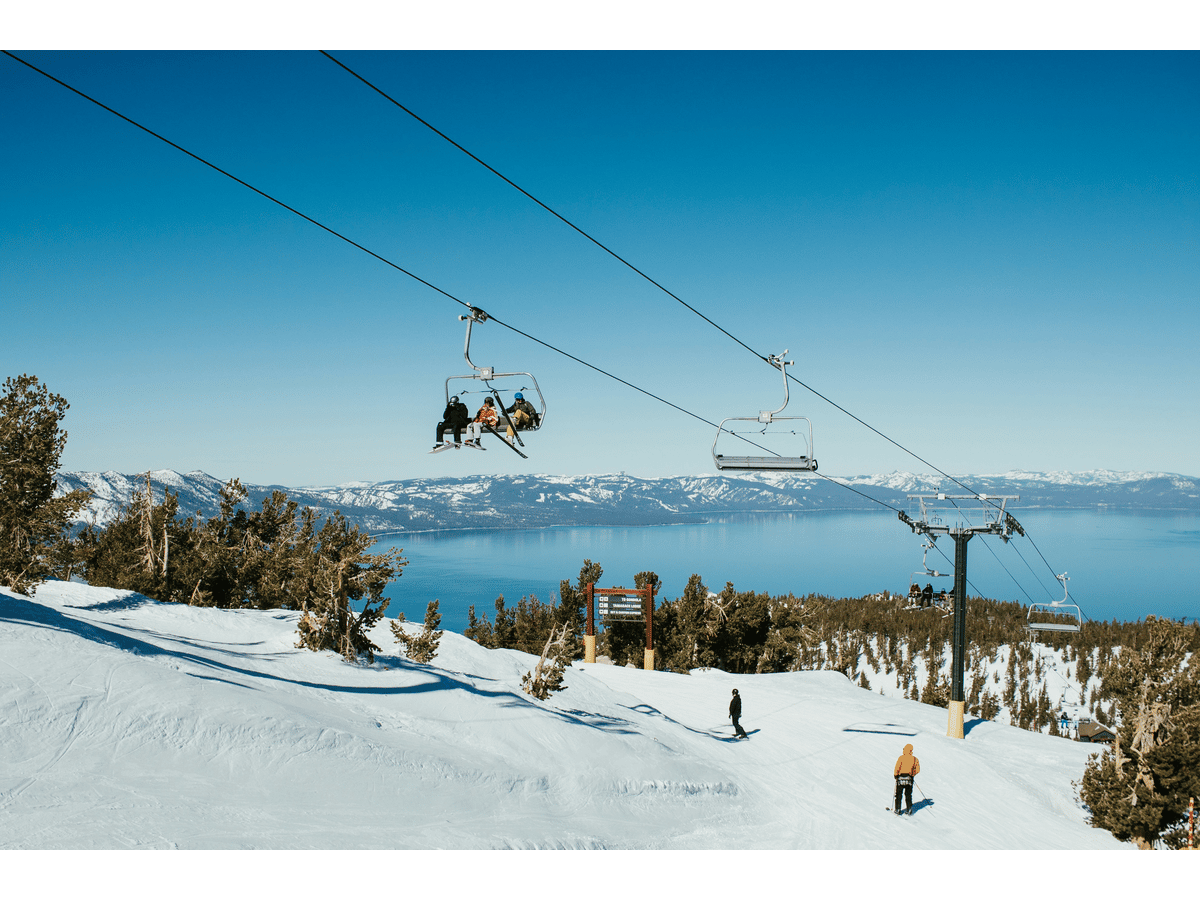
The Tahoe Regional Planning Agency can cap development basin-wide across the California-Nevada line, its deputy executive director, Kim Caringer, told the room by video. Its authority rests on a 1968 bi-state compact that California Governor Ronald Reagan and Nevada Governor Paul Laxalt signed and Congress consented to. Caringer called it "the first authority consented by Congress as an interstate compact that gave environmental and land use planning authority."
A 15-member board governs it, seven from each state plus a non-voting presidential appointee. Its budget of about $32 million is more than half grants, mostly federal; the two states split the rest two-thirds California, one-third Nevada. The agency has no taxing power of its own, and the arrangement itself "is not a given," Caringer said. Nevada nearly pulled out of the compact in 2012.
Dan Powers, a Teton County, Idaho commissioner, asked whether there was "a path to creating an organization like yours" that skipped "going through a federal act of Congress." "I think it's possible," Caringer said, though the transferable part was the groundwork: "set that collaborative foundation ... write up a pretty strong charter and then try to get the pathway through the bigger authority later."
"Without some authority to impose mitigation fees," said Mark Newcomb, chair of the Teton County, Wyoming commission, "I don't know how much teeth the program would really have." "We don't have the Olympics coming. We're not funded by two-thirds by California," said Wes Gardner, vice-chair of the Teton County, Wyoming commission. Chasing a Tahoe-style authority "would be frankly a fool's errand ... never gonna work in Wyoming and Idaho."
Whitefish: a fee with no driver
In Whitefish, Montana, the tourism organization Explore Whitefish levies a 1 percent "community services fee" across its member lodging, restaurant, and transportation businesses, said Darren Rudloff, a Wyoming tourism consultant and former CEO of Visit Cheyenne, who joined remotely. The fee is mandatory for member businesses and voluntary for the customer, who can ask the front desk to remove it. Half the receipts collected at restaurants go to Housing Whitefish, about $150,000 a year by Rudloff's estimate, and the money does not go into a government account. Idaho's property-tax cap and absent local-option tax leave the county few ways to raise money.
In the synthesis session Len Carlman, a Teton County, Wyoming commissioner, called the model "interesting, but ... really limited in scale, and somebody's gonna have to do a lot of work. And it's not going to be us. Those are hard partners to find." Gardner gave it a conditional "maybe," worth pursuing "only if you find a group of really concerned citizens, business owners, hoteliers, somebody who's committed to driving that car. And in the absence of that person ... I think we'd be spinning our wheels." Powers folded it into a working group alongside a resort-district tax, but they could not name the private champion the model requires.
Bear Lake: the closest fit, advisory only
The Bear Lake Regional Commission, formed in 1973 by a joint-powers agreement between Idaho and Utah and signed by the two governors, shifts Idaho grant money to invasive-species boat inspections in Utah. "Basically what we do is take money from Idaho and use it in Utah," its executive director, Mitch Poulsen, said by Zoom. "Idaho cannot fund Utah directly, but because the regional commission is a bi-state entity, we kind of launder that money in a sense." County joint-powers agreements reach only "other entities within the state of Idaho," said Billie Siddoway, Teton County, Idaho's administrator, which is why the governors had to sign the Bear Lake deal, and why a Teton version "might require some extra help."
"It's more of an advisory board," Poulsen said. "We don't have any decision-making authority." Its members carry ideas home, and the commission survives on legislative goodwill: "we are an unmandated organization," first to be cut when state revenues fall. Natalia Macker, a Teton County, Wyoming commissioner, floated building a commission with seats allocated to each entity (municipality, county, a citizen seat, recreation seats), then defining what such a recommending body could do.
The forum they already had
Basil Barna presented the Teton Area Advisory Forum from a three-ring binder of his own papers. The cross-border convening group spent about two decades bringing people together around shared problems, among them a backcountry road-etiquette forum in its early days and the 2005 "Transit in the Tetons" workshop that helped clear buses over Teton Pass. It survives as a registered Wyoming nonprofit, kept dormant by design.
"This organization is not meant to perpetuate itself," Barna said; it wakes when someone has a problem worth solving and otherwise "goes into hibernation." Around 2017, he said, commissioners had concluded it was no longer needed and floated dissolving it.
"I wasn't aware of" the forum, Newcomb said, "but to know that that's there and that it's had impacts on services ... it's important." Sue Muncaster, Victor's interim mayor, pointed to the forum's community-engagement method as "one of the first steps." Kim Keeley, the Teton County, Idaho clerk, said, "It seems like there's sort of an infrastructure of resources already in place that we should be utilizing."
Where the cross-state service models stop
Tahoe's authority needs an act of Congress and California's money. Whitefish's fee needs a private champion the counties doubted they could find. Bear Lake's commission works but calls itself advisory and unmandated. The forum the counties built themselves had gone dormant and half-forgotten.
"I am mostly interested in what we've seen work. The MOU with the fire EMS, that we've seen work," Gardner said. "That's where I want to put most of my eggs in that basket. How can we take what we see work, model it for other programs potentially?" He meant the fire and EMS agreement between the two counties.
The commissioners voted only to adopt their agenda and to adjourn.
Sources
Subscribe
The Morning Signal
Teton Valley news, once or twice a week. The reporting is airtight. The introduction is unhinged.