The Joint Workshop Ended With Four Working Groups and a 60-Day Clock
Idaho and Wyoming's Teton counties left their first joint workshop with four working groups to price shared growth costs on a 60-day clock.
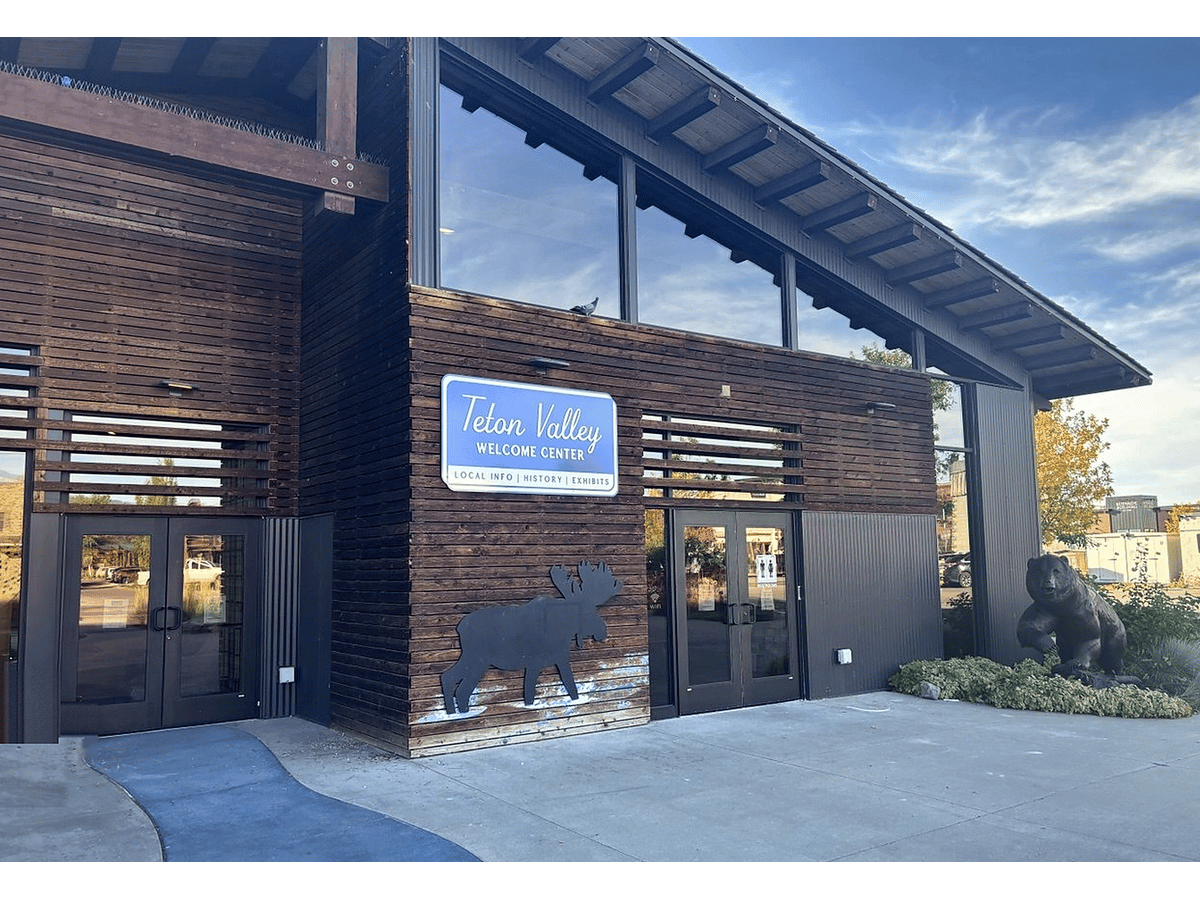
DRIGGS — The two Teton counties' first joint workshop ended July 23 with four small bi-state working groups. Commissioners from Teton County, Idaho and Teton County, Wyoming coalesced around them, each group asked to price out a single shared problem and report the costs back to the two boards. The commissioners aimed to form them within 30 to 60 days. The counties had spent the day looking for ways to move money across the state line, where Grand Targhee's growth costs fall on an Idaho county with fewer ways to tax for them (overview).
The workshop, held in the Driggs commissioners' room, took no substantive vote. The only formal actions recorded all day were the Idaho board's adoption of the agenda that morning and, seven hours later, each board's separate adjournment.
The working groups came out of a closing exercise in which the facilitators, Melanie Armstrong of the University of Wyoming's Ruckelshaus Institute and Katherine Himes of the University of Idaho's McClure Center, sorted the day's ideas by how much effort each would take against how much it would deliver. The low-effort column included a regional transit advisory board modeled on the cross-state fire and EMS deal the two counties already run, a common data dashboard to show where the valley stands now, a standing six-month check-in between the two commissions, and the four working groups themselves.
A chartered regional authority modeled on the Tahoe Regional Planning Agency was placed as a mid-to-major effort, and Wyoming commissioner Wes Gardner called pursuing it "a fool's errand" in Wyoming and Idaho. A full regional comprehensive plan spanning both states was sorted as a major, long-horizon project.
As Idaho commissioner Dan Powers proposed them, the four groups would each pair at least one commissioner from each county with some city and staff representation. One would examine a resort tax and a voluntary fee. One would look at a law-enforcement MOU. One would take up regional transit, and one the safety of Teton Pass. They would decide nothing. Powers described them as a "more nimble" way to work through problems "rather than addressing them from the Commission as a whole," charged only with identifying each option's challenges and costs and presenting those to the two boards. He put the startup window at 30 to 60 days.
On a separate track, Idaho chair Brad Wolfe said a county-to-county service agreement could be realistic in 60 to 90 days, because the day's materials already put dollar figures on many of those impacts. The agreement would cover dispatch, the sheriff, and roads, paired with a resort fee for current and future impacts.
When the facilitators asked what the counties would need first, Wyoming chair Mark Newcomb said, "We really do need base-level thorough economic analysis," listing job generation, "the numbers, the types of jobs, the wages associated with those jobs," and forecasts for where both counties will stand in 10 and 20 years. Any fair discussion of "possible taxpayer dollars," he said, had to rest on solid data, "certainly from a legal point of view, but also just from a fundamental fairness point of view."
Tourism-data collection in Teton County, Idaho runs at a small fraction of Wyoming's. Victor interim Mayor Sue Muncaster put the asymmetry at "like 5%," an unsourced in-room estimate. Both economic studies the counties had to work from dated to around 2022, one Grand Targhee's and one their own. Clerk Kim Keeley called them "dated and frankly kind of questionable," then explained why: much of the Idaho county's financial data in that work "came from me, a lot of the financial data, and I was a pretty new clerk, and it was COVID." In hindsight, she said, "that's not really right." When someone raised yet another forthcoming study, Idaho commissioner Ron James cut in, "I love studies. Not really."
In a closing go-round, Wolfe pushed to open talks with the resort district. Newcomb urged caution, noting his county's budget and staff work plans for the coming year are already set and a senior administrator is retiring, so any new assignment would have to displace an existing one. Gardner said he would put most of his weight behind replicating the fire and EMS model for dispatch and a possible Alta sheriff arrangement. James said he would pursue state short-term-rental legislation. Wyoming commissioner Len Carlman asked the counties to open direct talks with Grand Targhee over their pending objections to the resort's expansion.
When Newcomb called for a motion to close, Wyoming commissioner Luther Propst moved to adjourn. "I second that," James said. Someone yelped, "Oh no! Wrong county!" Keeley called out, "You'll get your chance." Teton County, Wyoming adjourned on Propst's motion, seconded by Gardner. A beat later, Teton County, Idaho adjourned its own meeting.
What to watch: The four working groups were proposed to stand up within 30 to 60 days and bring cost findings back to the two commissions. A county-to-county service agreement could follow in 60 to 90 days. Whether the counties commission the base-level joint economic analysis Newcomb called for remains open. Without it, any cost-sharing agreement rests on 2022-era data the Idaho county's own clerk called questionable. A citizen-organized gathering on Teton Pass safety met on the Wyoming side August 3. Driggs Council President Allison Michalski said she would organize one on the Idaho side.
Sources
Subscribe
The Morning Signal
Teton Valley news, once or twice a week. The reporting is airtight. The introduction is unhinged.