Commissioners Look to the Fire Contract for a Wyoming-Funded Deputy in Alta
At the July 23 joint workshop, commissioners leaned toward a Wyoming-funded Alta deputy on the fire-contract model, not a standalone sheriff's office.
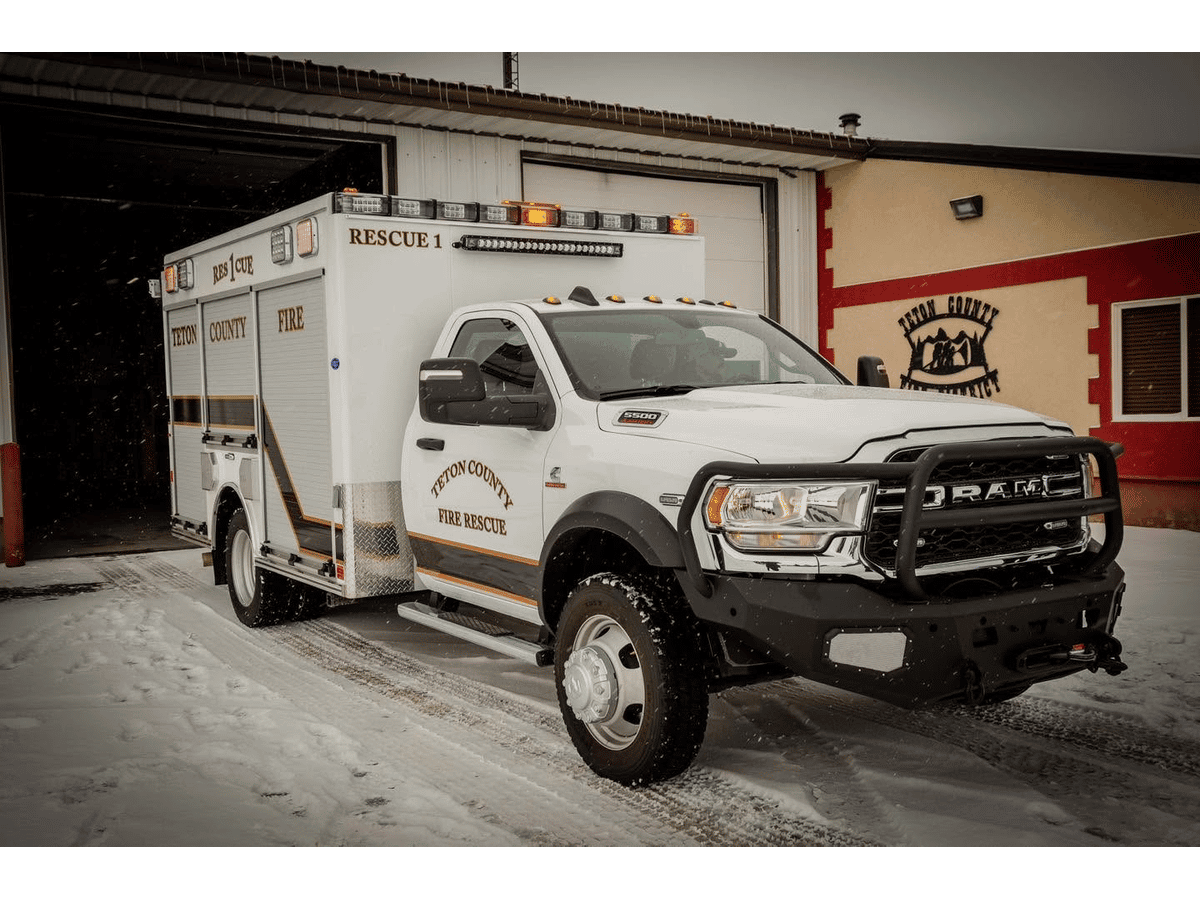
DRIGGS — Commissioners from Teton County, Idaho and Teton County, Wyoming steered away from standing up a dedicated around-the-clock sheriff's office in Alta and toward an arrangement Wyoming already pays for, the fire and rescue contract that funds Idaho crews to answer calls on the Wyoming side of the Tetons.
The two boards met July 23 for a joint workshop in Driggs, a non-binding session. The notice said the boards "will not make policy decisions" though they could direct staff to keep working, and the only formal votes taken all day were to adopt the agenda and to adjourn.
"Our benefit from a sheriff's standpoint would have you put someone in Alta full time," Teton County, Idaho Commissioner Brad Wolfe said in the closing round on next steps, adding in the same breath that "that's probably not going to happen immediately." As a stopgap, Wolfe floated "some kind of a joint powers agreement to give us authority so that we don't put our deputies at risk if they do need to go there."
An around-the-clock Alta deputy "is not one person being there 24/7, it's not 2 people, it's probably like 5 once you get everything," Teton County, Wyoming Commissioner Wes Gardner said, calling the standalone office the kind of item he would "go back and ask how much would this cost us." No service packet before the boards puts a price on a standalone Alta sheriff's office, and the five-person figure was a spoken estimate, not a costed number.
"The MOU with the fire EMS, that we've seen work. That's where I want to put most of my eggs in that basket," Gardner said. "We don't pursue a 24/7 sheriff's deputy office, whatever you call it, in Alta, but we contract with you guys so that, like your fire department, you can grow it to the needs of the region."
The fire and EMS deal the two counties already run covers Alta on the Wyoming side. No speaker said Wyoming would pay for an Alta deputy the same way.
"We used to have a mutual aid agreement for law enforcement. We no longer have that," said Keith Gingery, a Teton County, Wyoming attorney. "That was retracted after that lawsuit." Gingery named restoring "a mutual aid agreement actually signed" as "one that needs to get worked on." "Mutual aid agreements actually get signed by both governors. That's how the statute works," he said. Gingery did not say which lawsuit.
Teton County, Idaho Administrator Billie Siddoway told the boards that Idaho officers are "asked to go over to the pass to help with traffic control, which frankly, we don't have the officers to do," and that "we don't have immunity when we're being asked to do that." Without a signed agreement, she said, an Idaho officer keeps governmental immunity crossing into Wyoming only when invited and either has probable cause to believe a felony is underway, faces an imminent risk of serious bodily injury or death, or is in fresh pursuit. None of that covers being asked to run traffic control on the pass. A restored agreement, she said, would "protect our own officers."
"A mutual aid sounds like something a little bit more robust, and if that's what's required when it comes to law enforcement versus fire EMS, then I think that's something we want to look at," said Teton County, Wyoming Commissioner Mark Newcomb.
Commissioners cannot assign an Alta deputy the way they direct staff. "The sheriff's an independently elected official. I don't want to get over my skis here," Gardner said as he sketched the contract idea. Teton County, Idaho Sheriff Clint Lemieux answers to voters, not to either board. Idaho's joint-powers statute, the authority Wolfe invoked, applies only to entities within the state.
By late afternoon, a facilitator had written "mutual aid for law enforcement" on the board of ideas the commissioners might act on in the near term, alongside a fee-for-service dispatch arrangement.
What to watch: The facilitators are due to deliver a written summary of the workshop in the coming weeks, before the universities' fall semesters begin. The test is whether the two counties produce a signed law-enforcement mutual-aid agreement, the item Gingery flagged as retracted and not since restored.
Sources
Subscribe
The Morning Signal
Teton Valley news, once or twice a week. The reporting is airtight. The introduction is unhinged.