Victor Urban Renewal Board Postpones Fire Engine Deal Over South District Clause
Victor's urban renewal board postponed reimbursing Teton County Fire & Rescue for a fire engine after the fire district objected to a South District clause.

·
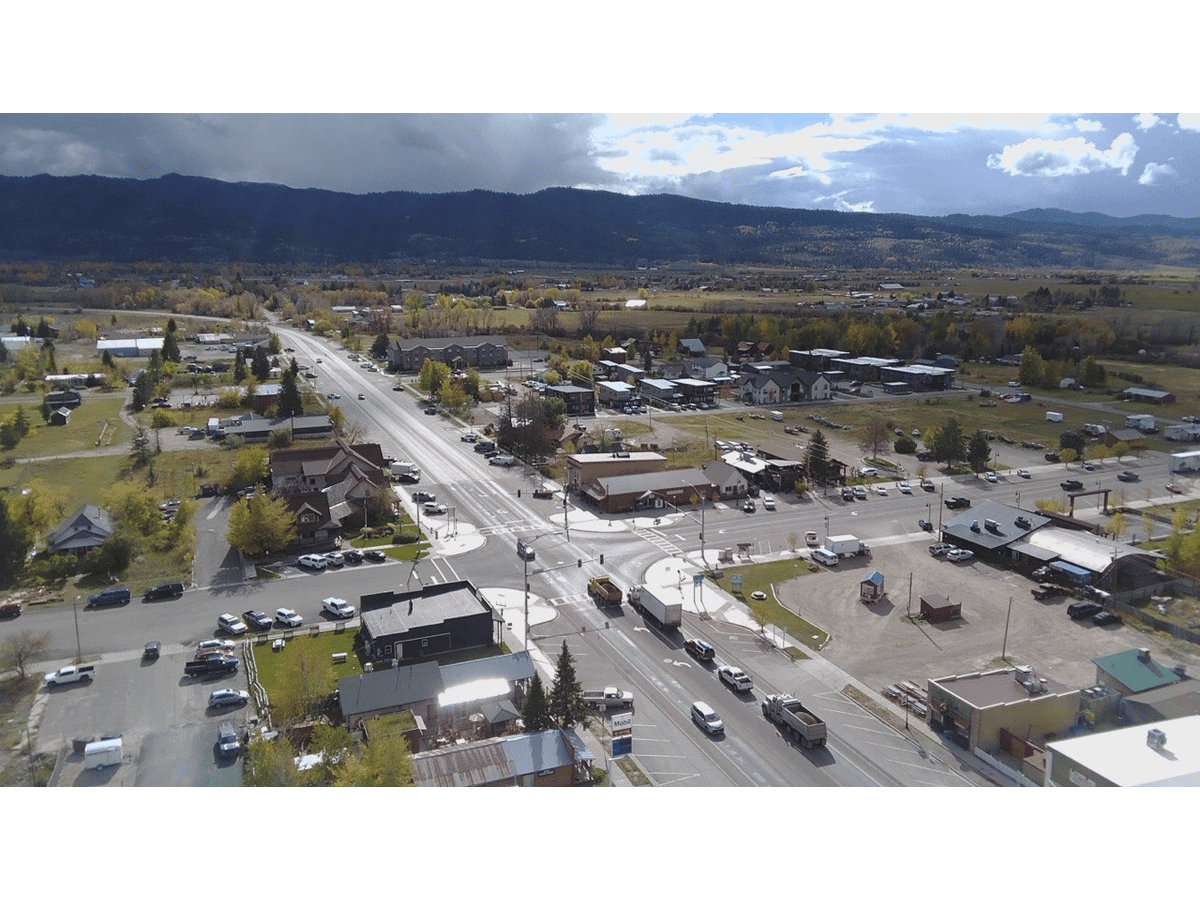
VICTOR — The Victor Urban Renewal Agency board postponed a vote Oct. 19 on reimbursing Teton County Fire & Rescue for a new fire engine and ambulance, after the fire district objected to a clause that would commit it to stay in urban renewal districts the agency has not yet formed.
The draft agreement prices the fire engine at $780,000 and the ambulance at $300,000. The agency's North and Downtown Districts cover 27 percent of Victor's acreage. That percentage is used to calculate its share of the equipment, capped at $291,600 and no more than $100,000 a year. Originally, the agency's share was $270,000 when the deal covered only the engine, which has already been purchased. "The engine has been ordered and paid for," the fire district's chief financial officer, Mariana O'Neill, told the board. Troy Butzlaff, the agency's executive director, opened the item with a caveat: "We've hit a little bit of a snag." The vehicles, he explained, cost "$1,080,000 in total, but we're only reimbursing 27% of that through the North and the Downtown Districts."
The snag is language from the agency's attorney, saying the fire district "will consent to be included in any new revenue allocation area." Butzlaff told the board he had sent the markup to Chief Mike Maltaverne "on Wednesday of last week," and the chief "responded back with some concern about one of the provisions." "The attorney's language was all urban renewal agencies going forward. It was really intended to be just the South District." Maltaverne, who did not attend, reached Butzlaff over the weekend; by Butzlaff's account, the district's "feeling is the issues are separate and apart."
The South District is the third one the agency is drafting, on the south end of town. A 2025 state law, House Bill 436, lets a fire district decline to be included in a new urban renewal district and keep its share of the taxes, which Butzlaff called "essentially a vote veto." If the fire district wasn't going to opt in, "we talked about not necessarily going forward with the South District." "Do we want to put in the time, money, and effort to form a South District knowing that if it's formed and the district opts out, we lose 20% of the tax increment forever?" he asked the board. The agency has spent $40,000 to $50,000 preparing it. Striking the clause would let the fire engine deal go through, he warned, "and, in doing so, you're essentially giving up your leverage."
Fire Commissioner Erin Borbet, who chaired the joint working group the three bodies formed under their agreement, told the board, "That was not brought up ever that I can remember, that the South District was a big part of this agreement." Urban renewal Chairman Ian Everard put the agency's share at "41% with the extra acreage" once the South District formed, and Butzlaff added that the agency "would just amend the reimbursement agreement to include the South District." An August reimbursement schedule from the agency had already counted the South District, putting the share at 44%, or $440,000 on a $1 million engine.
The draft agreement says only that it "may be amended." "So does the reimbursement amount in the agreement reflect being part of the South District?" Borbet asked later. "No, because there isn't a South District," Everard replied.
Butzlaff estimated that the fire district would get "about $25,000 a year tax increment" if it opted out of the South District, and pointed to "the value over time, not only getting money reimbursed to the district for equipment, but the value of the improvements that will come to you." He left the comparison to the fire district: "That's your math to do."
O'Neill answered, "So $25,000 per year for the next 20 years. Also, that adds to the budget." Idaho lets a fire district's property tax budget grow up to 3% a year plus an allowance for new construction, and building inside an urban renewal district doesn't count toward that allowance until the district closes. "It's not just $25,000, it's the 3% that we also get for growth," O'Neill continued. "So again, $25,000, let's say $20,000 for the next 20 years. It's more than what we would get reimbursed."
Butzlaff told the fire district's officials, "My recommendation is we postpone, and we wait until you have your data." "I cannot comfortably recommend to this body, let alone myself as executive director of this agency, that we enter into an agreement when I thought the agreement was a global agreement, not just a segment." Asked what a month would change, O'Neill replied, "I can't promise that we will have numbers in a month." She was "working with the county clerk to get those numbers," and when Everard asked whether she had a ballpark, she answered, "I do not." Later, she proposed signing the reimbursement now and negotiating a separate agreement for the South District.
Urban renewal Commissioner Jennifer Blair moved to approve the fire engine deal "that we agreed to in good faith." It drew no second. Everard then moved to postpone "to get more information and clarity," fellow urban renewal Commissioner Landon Kaufman seconded, and the motion passed 3-1, with Blair opposed. The motion sets no date, only "another meeting, whether it be a special or regular," in Butzlaff's words. On her way out after the vote, Blair told the board, "We should not be so contentious. They are the fire district who are coming to our fires."
O'Neill pointed to the memorandum of understanding the three bodies signed last year: "It doesn't say anything about the South District." Article III of the memorandum bars the fire district from pursuing an opt-out of "any planned or to be enacted revenue allocation area" for twelve months from the last signature. Its first page is dated Nov. 11, 2025, and O'Neill told the board it expires Nov. 11. Butzlaff countered that it runs later "because it wasn't fully signed off," and the signed copy shows Everard's signature, the last, dated Dec. 1, 2025.
Once it lapses, the fire district can also seek to leave the North District. "We did everything that MOU said we would do. We didn't opt out, and this is expiring," O'Neill told the board. "So in a month, then we have the option of opting out of the other one." Leaving the North District would bring the fire district "about $1,400 a year in tax increment," Butzlaff estimated.
Butzlaff expects to bring the South District to the agency's board "probably in February, and then ultimately to the City Council in March or April." "Right now, the South District hasn't been formed, so it's not going to happen before the expiration of the MOU," he acknowledged.
What to watch: Board members floated a special meeting Thursday, Oct. 29, and Butzlaff offered to check whether urban renewal Commissioner Fergie Rains, who missed the Oct. 19 meeting, could attend. He told the board he will be away Nov. 3 through 19, so "unless we can get this resolved before the end of this month, it's going to have to wait until the end of November."
Free newsletter
The Morning Signal
Teton Valley news, once or twice a week. The reporting is airtight. The introduction is unhinged.
Free. Unsubscribe anytime.