Fire District Won't Fund a 911 Review Without Full Cooperation From the County
Teton County's fire district won't fund an outside review of 911 dispatch without full cooperation, as the county spends on its own fixes first.
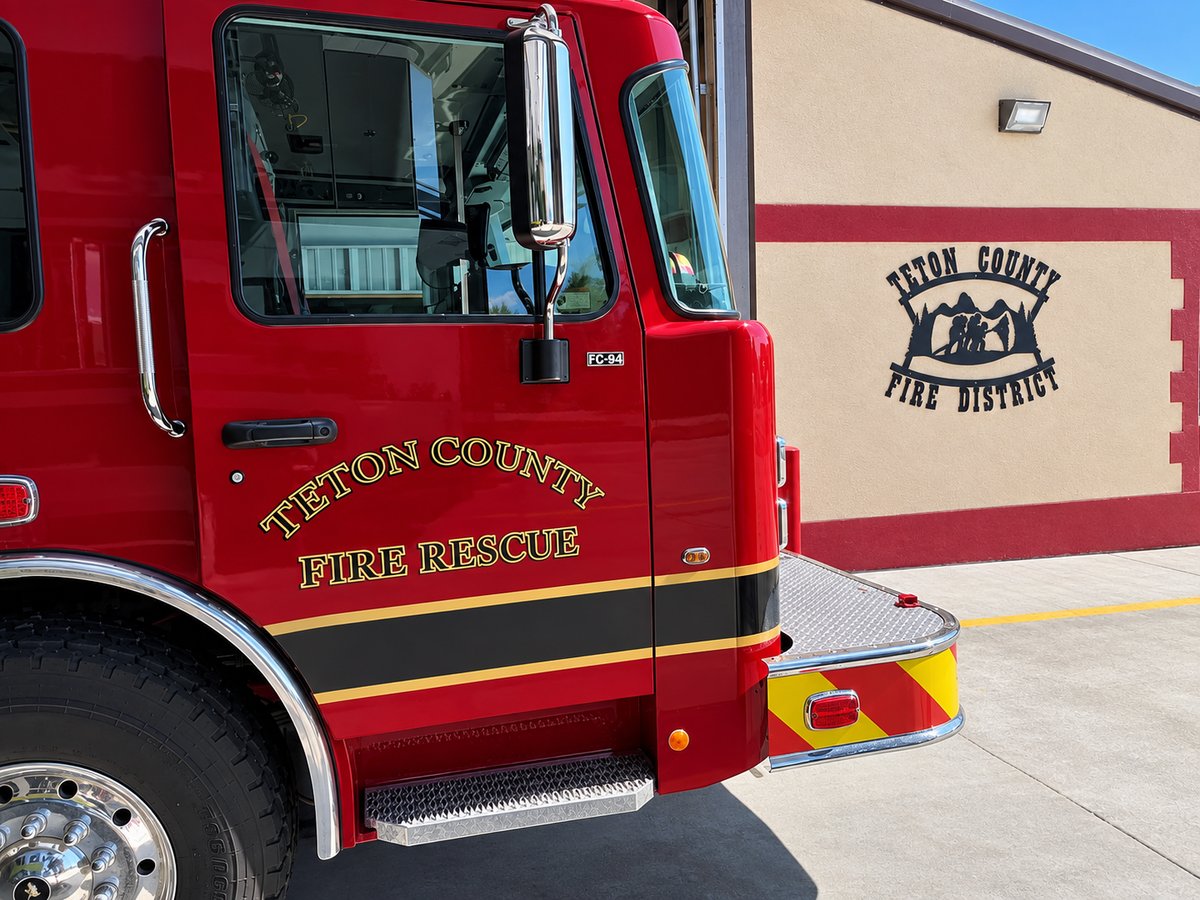
DRIGGS — Fire Chief Mike Maltaverne told Teton County commissioners in a Sept. 29 letter that his fire district, Teton County Fire & Rescue, is stepping back from its offer to pay for an outside review of the county's 911 dispatch center until there is "demonstrated commitment and full cooperation from all parties."
The county's budget for the 2027 fiscal year, which starts Oct. 1, raises dispatch spending 79 percent, to $1,232,290, and adds two dispatcher positions. The county has also set aside $540,000 of its general fund cash to upgrade dispatch hardware and software. The Sheriff's Office runs the dispatch center, and the county is negotiating on its behalf a five-year contract for medical and fire call-taking protocols. In a Sept. 17 email, County Administrator Billie Siddoway proposed shelving the outside review for a year while the county implements changes already approved.
Maltaverne emailed the letter to Chairman Brad Wolfe on Tuesday morning and copied Siddoway, Sheriff Clint Lemieux, County Clerk Kim Keeley, and city officials in Driggs and Victor. "Due to the apparent lack of support from the County Administrator, the Sheriff and members of the Board of County Commissioners, the Fire District will step back from conducting and funding the Operational Assessment of the 911 Center," he wrote.
He named "lack of transparency, lack of effective communications, and a lack of coordination and collaboration" as the reasons, and wrote that the review "was never meant to be weaponized as it has been by County staff." It calls the county's added staff, infrastructure, software and new medical and fire dispatch procedures "steps in the right direction," and says the district "remains open to participating in and contributing to an independent operational assessment in the future."
The advisory committee the board agreed to form in May was meant first to rewrite the dispatch contract between the county and the district. By July it had widened into a public-safety task force, and the county was asking the cities to help pay for dispatch. The district's letter still asks for "a revised Service Agreement." The district has not paid for dispatch in the county's 2026 fiscal year, which runs from Oct. 1, 2025, through Sept. 30. On July 1, Maltaverne told commissioners it was withholding the payment until it got "a contract that works." "Full transparency, ask your clerk, we haven't paid you a penny this year," he said.
Maltaverne sent Siddoway a draft request for proposals on Aug. 26. "I have verbal approval from the Fire Commissioners to proceed with the RFP process, identify costs and ultimately pay for the study, barring any unreasonable amount," he wrote.
The draft asks a consultant to examine ten areas, from staffing and the center's budget to medical and fire dispatch protocols and whether dispatch could be consolidated with Madison County's. Its review of medical protocols covers "medical priority dispatch systems in use," the kind of system the pending contract would buy.
Of consolidation, Maltaverne wrote in the same email, "I fully understand that this is off the table." He proposed studying it anyway and keeping that part of the results "for internal, future use or reference."
Siddoway replied 22 days later, on Sept. 17. "If consolidation is part of the scope of work, the Sheriff's Office and Dispatch are not interested in participating," she wrote. "Perhaps we can shelve the assessment for a year, implement the changes to staffing and procedures that have already been approved, and revisit an assessment at a later date."
Maltaverne forwarded her reply that afternoon to the mayors and city administrators of Driggs and Victor and asked whether consolidation interested them. "It certainly is for the Fire District," he wrote. "As a reminder, the Fire District is willing to pay for the Study."
Commissioner Dan Powers asked for the item on the board's Sept. 28 agenda. He told the board he had seen a letter from Lemieux and Siddoway "saying that they wouldn't agree to any study that considered regionalizing," and he objected to it. "I think that's the board's authority to do it. I don't think that's the sheriff's authority."
Lemieux said he had raised a regional center with neighboring sheriffs, "and none of the sheriffs are interested in it."
A March 2026 evaluation by the Legislature's Office of Performance Evaluations found that Idaho likely runs more 911 centers than its call volume requires. Idaho operates 48 centers whereas Utah has 27, and reports a similar number of calls per resident. The state report noted that consolidation has become more common nationwide but declined to recommend it, citing a lack of statewide data and finding that closing or merging centers is "largely unappealing to local officials."
Wolfe said the county should "give this a chance for a year to see how it works and see if we can solve a lot of the problems that we're trying to solve with the study before we spend money." He added, "I'm thinking, why spend the money right now? Let's give hope a chance."
Maltaverne, who joined by Zoom, said the district had raised its concerns about dispatch for at least three years and the two sides had been "at pretty much a stalemate." On consolidation, "we can exclude that and we can proceed with the study," he said, and he reminded the board that "the fire district and the fire commissioners have offered to pay for the study so there's no money coming out of the county's coffers."
Commissioner Ron James, who had said earlier that "we're not against the whole study," objected to the spending. "Study is a hot-button word for me," he said.
Powers said the county was "throwing money at the problem right now" by hiring more dispatchers, and that the study would cost about half of what one dispatcher costs for a year. Wolfe responded, "Well, I apologize. I thought we were being asked as a county to participate in the cost of the study."
Maltaverne echoed Powers. "How do we know that hiring more dispatchers is going to solve anything," he said. "I'm concerned that if we sign a contract with Priority Dispatch that we can even implement that kind of change due to the lack of capacity in the 911 center."
James answered that the money would do more good "investing in our people," through training that helps the county keep its dispatchers.
Wolfe said he would support a study that left regional dispatch out, because consolidation "seems to be more of a negative than a positive at this juncture." He added, "I don't want to get a report that says you guys need to do this and then have you come in and say, well, you guys were told to do this and you haven't done it. So we don't want to pay our bill this year."
Maltaverne answered, "100%, 100% agree." Then he added, "At the end of the day, we are morally, ethically, and contractually obligated to make that center the best we possibly can."
The Priority Dispatch agreement was on the same agenda as an action item, and it did not come to a vote. The version attached to the agenda was a placeholder the county could not sign. The county has not been able to get the company to agree to changes it considers essential.
The company's quote, attached to the agenda, prices the subscription at $24,770 a year for five years, or $123,850, and includes training and certification for 12 call-takers and a supervisor in its emergency medical and fire dispatch protocols. At the board's Sept. 14 meeting, Siddoway said dispatchers were "planning on going over the first week of October to train," and added, "We don't have the contract finalized yet."
What to watch: Whether commissioners approve the Priority Dispatch contract before the training planned for the first week of October.
Sources
- Teton County BOCC agenda, Sept. 28, 2026
- Priority Dispatch quote Q-87685, Sept. 23, 2026
- FY27 budget hearing notice, department table
- Clerk's FY27 final budget memo, Aug. 24, 2026
- Idaho Office of Performance Evaluations, "Challenges Facing Idaho's 911 System," Evaluation Report Part II, March 2026
- Teton County BOCC meeting video, Sept. 28, 2026
- Maltaverne letter to Chairman Wolfe and the Board, Sept. 29, 2026
- Email thread, Maltaverne and Siddoway, Aug. 26 and Sept. 17, 2026
- Draft RFP, "Comprehensive Operational Assessment of Teton County 911 Dispatch Center," Aug. 26, 2026
- Fire chief and BOCC will form committee to rebuild dispatch services agreement
- Teton County's 911 dispatch fix widens into a task force and slips to August
- Teton County's FY27 budget grows, shifting toward dispatch and the jail
Subscribe
The Morning Signal
Teton Valley news, once or twice a week. The reporting is airtight. The introduction is unhinged.