Midway Substation Returns to Teton County June 8 With New Mitigation and a Narrow Legal Test
Fall River seeks reconsideration of its Midway Substation denial. The June 8 hearing pits a stronger project against a narrow legal test.
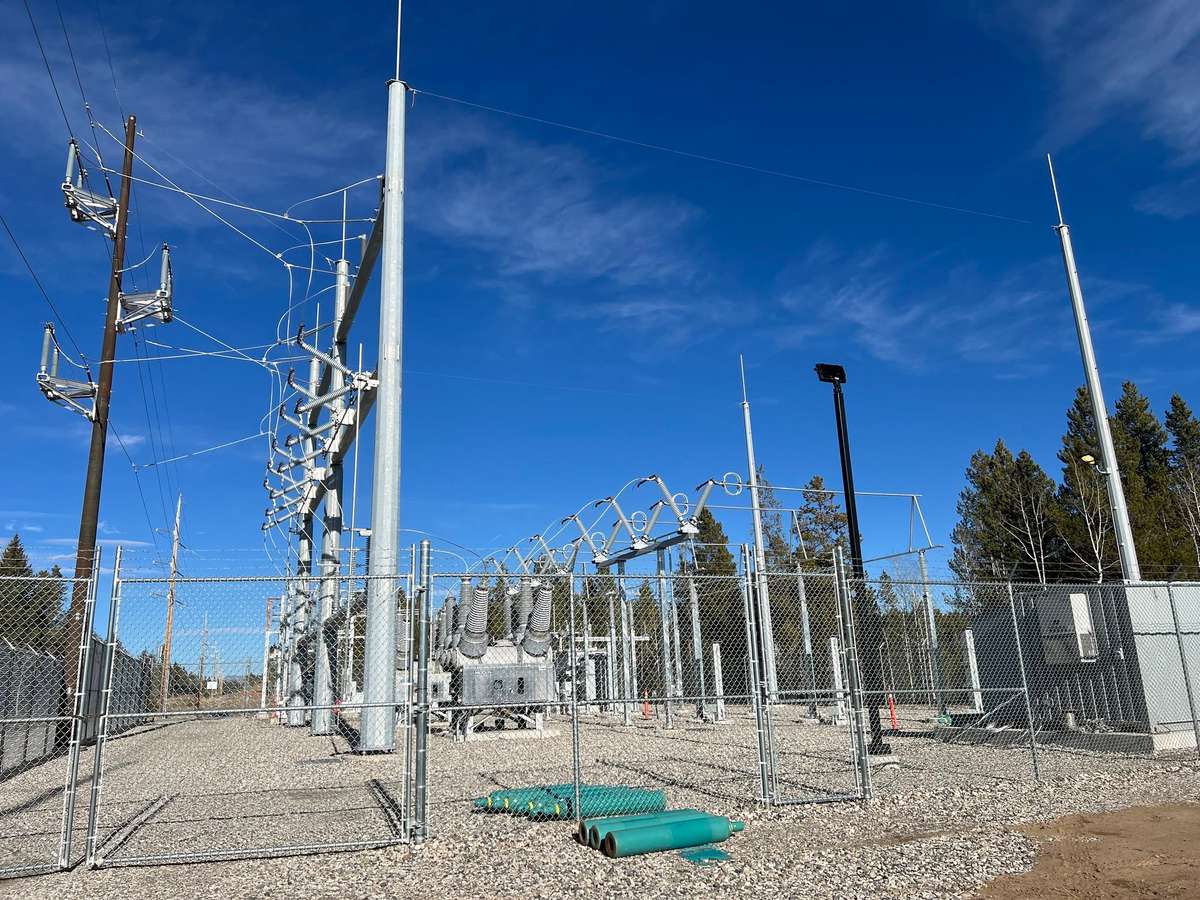
DRIGGS — Fall River Rural Electric Cooperative has asked Teton County to reconsider its denial of the Midway Substation, setting a June 8 hearing on a project the county commissioners rejected 2-1 in March. Update, May 29: Fall River has withdrawn its request for reconsideration.
The reconsideration request asks the commissioners to revisit that vote. But Idaho law does not treat reconsideration as a second hearing on the merits. It asks whether the original decision was legally flawed. Fall River has answered with a stronger project: more mitigation, a fuller engineering case, and a cost argument for keeping the substation on its 3500 South site. None of that is the question the law puts to the commissioners.
Commissioners denied the special use permit for the Midway Substation, planned between Driggs and Victor, on March 23. They found the substation incompatible with the surrounding rural residential neighborhood, with adverse impacts on neighbors that could not be mitigated. The Planning and Zoning Commission had recommended denial in November. Commissioners Dan Powers and Ron James voted to deny; chair Brad Wolfe dissented and said the county's Land Development Code could support a decision either way.
Fall River filed its reconsideration request April 27, the last day of the 14-day window the code allows. Reconsideration is the step Idaho law requires before a denied applicant can take a land-use decision to court. The commission has 60 days from the filing to affirm, reverse, or modify its decision, or the request is deemed denied. The state's Local Land Use Planning Act also sets what the request must contain: it "must identify specific deficiencies in the decision," a flaw in how the commission reached or wrote its denial. The county code repeats the requirement.
Fall River's filing is built around added mitigation rather than a claim of legal error. The cooperative proposes an irrigation well to sustain a vegetative buffer around the substation, commits to moving overhead distribution lines along 3500 South underground, and resubmits noise and electromagnetic field studies it commissioned. In the filing, Fall River addresses the code provisions the denial cited and offers the changes as its response. It is the third set of revisions the cooperative has made, after the studies and a revised landscaping plan it added between the November planning denial and the March vote.
The cooperative's case for the site rests on necessity. In written answers to the Signal, Fall River said the location between Driggs and Victor sits near the highest concentration of electrical demand in the southern valley and next to a Bonneville Power Administration transmission line the substation would tie into. A site farther north would cost an estimated $16.2 million, against $4.96 million at 3500 South, the cooperative said, because it would sit farther from demand and require new distribution lines. Fall River said no large enough parcel is for sale to the north.
Fall River builds the case for 3500 South on internal forecasts and a 2019 system study by Hi Line Engineering. The cooperative declined to release the studies, citing proprietary information and grid security, and plans another this year. As an example of system strain, Fall River described a four-hour outage in January 2024 during a cold spell that reached 20 below zero, when it weighed rolling blackouts and discussed warming shelters with the county's emergency management director. The cost comparison and the engineering case are Fall River's strongest arguments for June 8, and the commissioners cannot check either, because the studies are not public.
Fall River's choice of site has drawn objections. Residents who submitted comments during the planning review argued the cooperative could assemble land at the Rocky Road Industrial Park, an industrially zoned area about eight-tenths of a mile north, where they said a substation would face fewer conflicts with neighbors. The 3500 South parcels are zoned rural neighborhood.
The cooperative has described the substation as long anticipated. A county planning staff report said Fall River had recognized the need "for over two decades" and had been searching for a suitable site. Fall River put the 3500 South site under contract in 2024. County property records show it closed on the two parcels that make up the 10-acre site in July 2025, and it applied for the permit that September.
The reconsideration leaves the commissioners two options, and either can be challenged in district court. Denying it is the course a narrow reading of the reconsideration standard points toward, because the filing offers a better project rather than a specific flaw in the March decision. But a denial lets Fall River take the original ruling, which the board split 2-1, to district court.
Granting it would reverse a decision two of the three commissioners made in March, on the strength of mitigation and a cost argument the reconsideration standard does not ask them to weigh. Opponents of the substation would have the same statutory right to challenge a grant. They could file their own reconsideration request and seek judicial review if the board denied that. Idaho courts have not addressed how the reconsideration step applies when an applicant answers a denial with a new round of changes.
What to watch: The Board of County Commissioners takes up the Midway Substation reconsideration June 8 in Driggs. If it does not rule within 60 days of the April 27 filing, the request is deemed denied. A denial or a deemed denial would clear Fall River's path to seek judicial review in Idaho district court.
Sources
Subscribe
The Morning Signal
Teton Valley news, once or twice a week. The reporting is airtight. The introduction is unhinged.