Victor Interviewed Six for a Council Seat. Its Councilors Split Over the Mayor's Critics.
Victor's council interviewed six for a vacant council seat on August 12, made no nomination, and split over whether the mayor's critics should get the seat.
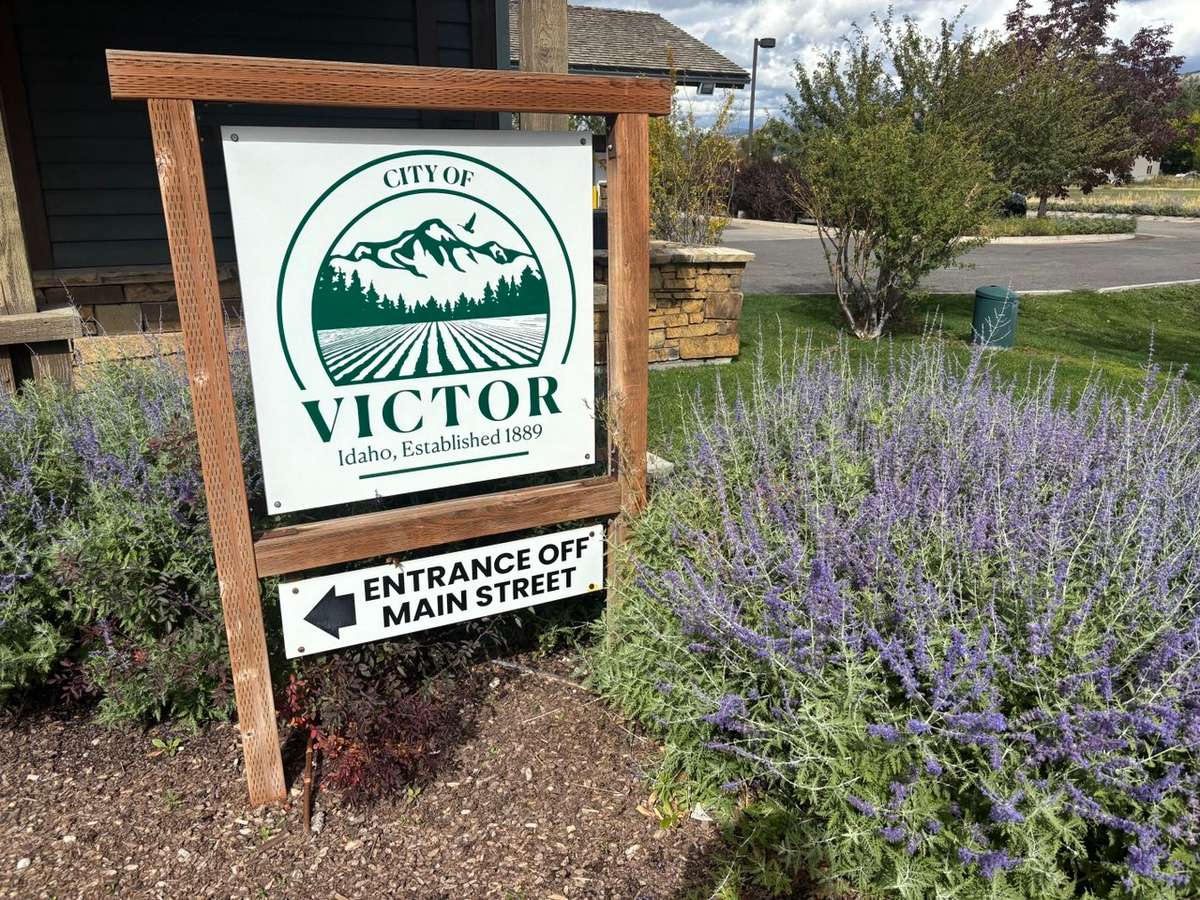
VICTOR — The Victor City Council interviewed six applicants for its vacant council seat on August 12, made no nomination, and ended the night divided over whether the residents who spent the past year objecting to the city's decisions should be the ones to fill it.
Mayor Will Frohlich resigned July 1 in the face of a recall organized by the Victor Watch Dogs. The council appointed Councilmember Sue Muncaster interim mayor on July 8 to finish his term, and her move to the mayor's chair left the council seat now being filled.
Whoever gets the council seat serves until the 2027 general city election and votes on the wastewater agreement with Driggs, a comprehensive plan rewrite, and a budget the council set at $9,023,870 for the coming fiscal year in a public hearing later the same night.
The interviews
Each applicant got 15 minutes and four questions the city sent in advance. The first named four tensions: property rights against the common good, housing affordability against small-town character, environmental stewardship and infill development, and short-term fiscal restraint against long-term investment. It asked each applicant to pick one, say which value they prioritize, and name what information or circumstances could cause them to reconsider.
Four of the six took up that last part. None of them named a fact about a decision in front of Victor. Erica Linnell said she would move for someone who came at her with "both data and authenticity" and without presuming the council acted in bad faith. Bert Schnoebelen said it would take "the stats and the data" with the emotion removed. Charles Nussbaum came closest to a specific, saying a developer who accounted for water use, wildlife impact and lot sizes could change his mind, on a large parcel inside city limits he said he did not think existed. Carol Nowakowski said what would change her mind about saving for a house was "inheriting money or winning the lottery."
Cindy Riegel and Bonnie Chambers did not get to the question. Riegel spent the answer on the comprehensive plan, then in the next question gave the only account of having changed her mind on anything: as a county commissioner she dropped a plan to cut snowplow service to remote roads after a landowner told her the conservation easement he had chosen over a subdivision was now costing him the plow. "And I said, okay, we're not doing this."
The substantive positions on money and wastewater surfaced in unscripted follow-up questions from a councilor or the mayor, not in the four questions the city wrote.
The full recording of all six interviews is below.
The six
Charles Nussbaum, a retired neurosurgeon who practiced at Teton Valley Health Care from 2022 to 2024, described himself in his interview as a skeptic and said he wanted both sides of a question before drawing conclusions. He disclosed a seat on the finance committee of Mountain Bike the Tetons, which appeared twice on the same night's agenda.
Bonnie Chambers, an architect, spent six years on the Pinedale, Wyoming planning and zoning board, three of them as chair. She is the only applicant who described applying a land-use code against a hostile room. She disclosed that her homeowners association board has contested a subdivision approval in the city and that she expects to apply for a building permit for her own home.
Carol Nowakowski is a Victor Watch Dogs organizer who announced the group's political action committee, the Victor Valley Collective, in a June op-ed, and has spent the past eight or nine months at Victor's council and planning meetings. Asked to describe a hard decision, she chose a deer cull at an Iowa nature center where she worked, placing herself among the "you can't kill the deer voices." "I'm a tree hugger," she said. "My friends and I used to call ourselves eco-terrorist feminazis." She then described the population study, the sharpshooters, and the meat donated to shelters. "Was it a perfect solution? Well, me as a lover of wildlife said no. But it was a solution that we could all live with. And it was hard." Asked whether she had sought Victor's side of the wastewater billing dispute as well as Driggs', she said she had not.
Cindy Riegel served as a Teton County commissioner from 2015 to 2025 and chaired the board. She is a donor to the Victor Valley Collective, filed an open-meeting complaint against the city in June, and is a named respondent in the case whose attorney-fee demand drove Victor's July 14 emergency meeting. Her written application cites Idaho's conflict-of-interest statute and commits in advance to recusing herself from the attorney-fee vote in that case.
Erica Linnell has lived in Victor about two decades and worked on the Envision Victor planning process. She filed the longest written answers of the six and was the only applicant to notice that the city's application form asked the same question twice, offering to answer a substitute if the council had meant to ask something else. She interviewed by video from out of town that morning.
Bert Schnoebelen, who runs a construction and real-estate development firm, filed the most detailed written answer on what a durable wastewater agreement with Driggs would have to contain. He also wrote that he was not interested in the seat but felt it was a necessity.
The split
At the council's regular meeting that evening, Muncaster took responsibility for extending the application deadline past its posted 10 a.m. cutoff, said it was "not to favor any one applicant" but to build a larger pool, and addressed the letter Frohlich sent councilors the day before the interviews arguing that Riegel should not be considered.
"I do not believe candidates should be eliminated based on organized opposition before they have a chance to answer questions publicly," Muncaster said, "which is why we took all the interviews today."
She then invited councilors to say who they supported "or if you're comfortable, absolutely don't support."
"The one thing that I might have looked for the most is not somebody without opinions, but somebody who kind of might be coming in with like fresh perspective and perhaps neutral perspective as well," Council President Stacy Hulsing said. "Not necessarily saying I'm coming in to fix a problem. Just, I'm coming in to add a new voice and move forward. And for that reason, I really liked Charles."
Councilor Emily Sustick declined to assess anyone. "I don't necessarily think this interview needs to be a public display of a popularity contest," she said.
"I feel like the fresh perspective is perhaps a way to discount people who have previously had objections to some of our decisions," Councilor Amy Ross said. She went through all six applicants, praising Riegel's experience in local government, Nowakowski's willingness "to put in and learn new things when it hasn't been easy," Nussbaum's "data-driven leadership experience," Chambers' architecture background and Schnoebelen's attention to the city's business. The applicant she did not praise was Erica Linnell.
Ross said Linnell had posted a comment on Facebook in the preceding weeks about Driggs not coming to the table fairly. "I don't know exactly how she would know that," Ross said, adding that she had written the comment down but did not have it in front of her. The post is not in the public record of the meeting. Ross said Linnell had also suggested that public comment must be polite to be considered, a reading she acknowledged Linnell disputed, and that Linnell should perhaps have mentioned the A.J. Linnell Trail, named for her late husband and on the agenda that night, as a potential conflict, though Ross said she did not think it would have to be one.
Ross had put the politeness question to Linnell that morning, asking how she would "embrace those people and their interests and involvement, given that you have some criticisms against them."
"I'm not sure that's what I said," Linnell answered, "but I'll do my best to answer your question." She said she welcomed people who get involved over an issue they care about. "My concern is when there's attacks, personal or otherwise. An assumption of malintent. Misinformation, disinformation, incomplete information. And then vitriol in general."
Sustick answered Ross: "I think you have double standards in the way that you're looking at the applicants, and I am going to leave it at that." She told her colleagues she wanted time with her notes and has agreed to give her assessment at Tuesday's meeting.
What to watch: The council meets Tuesday, August 18 at 10 a.m. to take the mayor's nomination and vote on confirming it. No public comment will be taken at the meeting, but written comment submitted at victoridaho.gov/public-comment by 5 p.m. Monday, August 17 goes into the record. Sustick has said she will give her assessment of the applicants then, which will make her the third councilor on the record and, on the evidence of August 12, the one who decides what the council seat is for.
Sources
- Victor City Council Interviews Staff Report, August 12, 2026
- Combined Application Documents for All Six Candidates
- Victor City Council Meetings, Agendas and Notices
- Victor Mayor Frohlich Resigns July 1, Defiant Toward the Recall
- Victor Appoints Sue Muncaster Interim Mayor After Amy Ross Withdraws
- Victor's Watch Dogs Form a PAC: The Victor Valley Collective
- Former County Commissioner Cindy Riegel Is a Donor to the Victor Valley Collective
- Victor Called an Emergency Meeting Over a $70,000 Fee Demand, Then Adjourned Without Direction
- Victor Opens Applications to Fill a Vacant Council Seat
Subscribe
The Morning Signal
Teton Valley news, once or twice a week. The reporting is airtight. The introduction is unhinged.