Commissioners Balk at Broad Exclusivity in Proposed RAD Franchise
Two of three Teton County commissioners questioned the breadth of exclusivity in the proposed RAD franchise renewal at an April 10 work session.
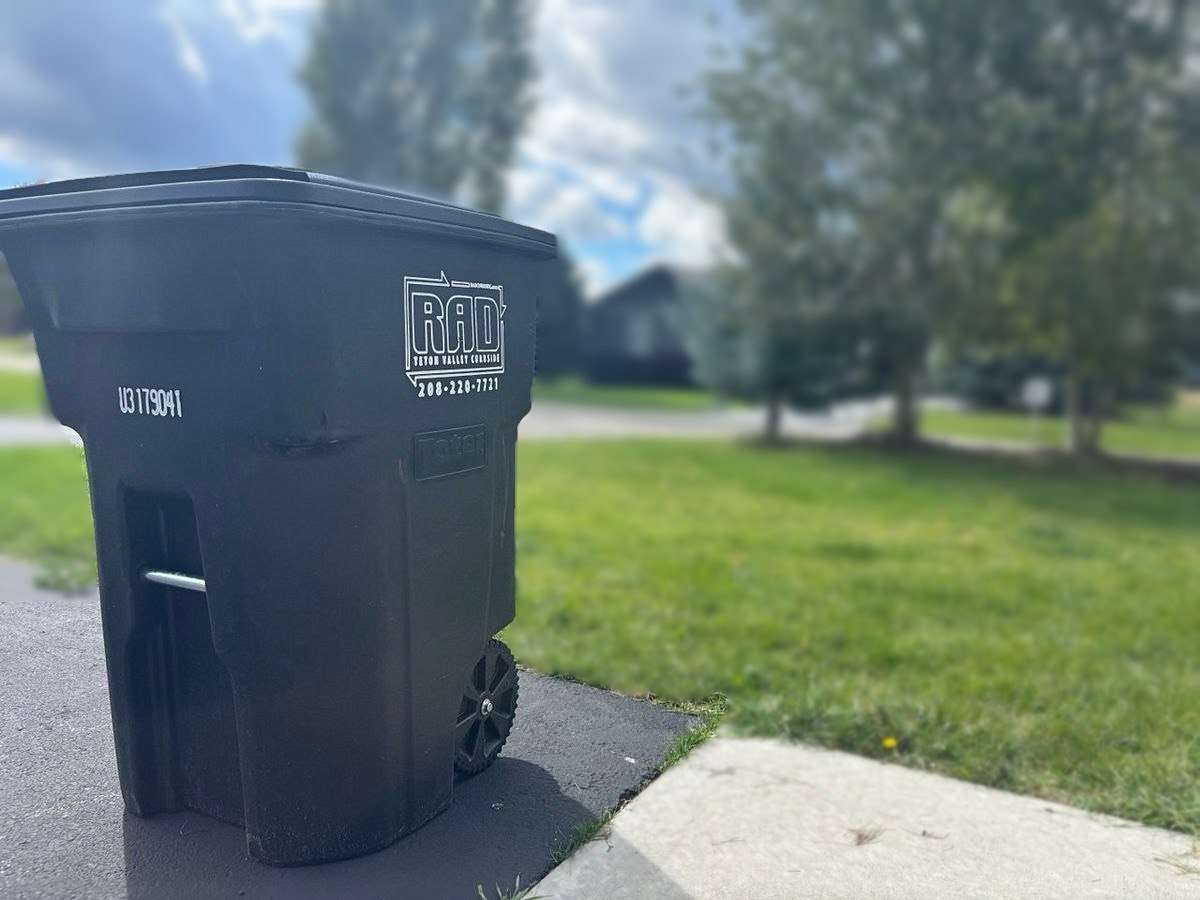
DRIGGS — Two of three Teton County commissioners questioned the breadth of exclusivity in a proposed new RAD franchise agreement at a Friday work session, with the third reluctant to disturb a working relationship. Commissioners declined to act, pushing the discussion toward amending the existing contract. The fallback is putting waste collection out to competitive bid for the first time since 2015.
RAD Curbside asked commissioners to approve and immediately adopt the proposed Amended and Restated Exclusive Franchise Agreement, which would replace the current contract entirely and give RAD exclusive rights to collect "all types of residential, commercial, construction, demolition, and industrial solid waste and recyclables generated in the County."
Public Works Director Darryl Johnson identified seven items in an April 10 memorandum that he and RAD could not resolve at the staff level: early extension without going to bid, exclusivity for all services, the seven-year initial term, seven-year automatic renewal terms (originally five), the elimination of a quantified public-education commitment, the franchise fee remaining at $10 per ton since 2015, and the absence of a public comment opportunity.
Solid Waste Supervisor Dan O'Donnell submitted written comments to Johnson on April 8, attached to the work session packet. Exclusivity should not extend beyond curbside pickup of municipal waste, O'Donnell wrote, noting RAD itself "started out as a recycling collection service when the previous curbside service provider operated in Teton County." Over the past three years, he said, the franchise fee paid to the county "could more or less cover the salary of the solid waste operator/recycler."
Johnson told commissioners he was hired by the county in 2014 and asked to address the franchise structure. Since RAD won the contract in 2015, he said, the company has operated without competition or going to bid. Renewing now would mean 19 years without ever putting the contract out to bid.
The exclusivity question
Commissioner Dan Powers led the questioning on exclusivity. Powers said curbside pickup exclusivity made sense to him, but exclusivity over broader hauling services did not. He cited a recent example in which someone asked the county about a business clearing junk from private property and was told the franchise prohibited it. He raised a second scenario: an off-site recycling drop-off that the county might want to establish, where RAD chose not to haul material from the location. "Why wouldn't we enable a third party to do that work?" Powers said.
RAD owner David Hudacsko answered that junk clearing is a service RAD does not provide. He said exclusivity allows RAD to invest in trucks and equipment with confidence in revenue, maintain consistent rates across the valley, and secure grants for infrastructure improvements. He cited a 2021 fire at the Teton County Transfer Station after which RAD pursued grants on its own initiative to improve the system.
Hudacsko also pushed back on a possible carve-out for scrap metal hauling. All scrap metal currently passes through the transfer station, he said, and the revenue from selling that material flows back into transfer station operations. Allowing a third party to capture metal would divert revenue from a county facility, Hudacsko said.
Johnson said that decisions on community improvements, as those Hudacsko described, should rest with the community itself. The contract gives RAD the option to be "the gatekeeper of ideas we want to explore," Johnson said, echoing language from O'Donnell's memo.
Hudacsko said RAD welcomed input on expanding services and listed compost, textiles, and household hazardous waste as candidates. "I'm excited about whatever brings diversion up," he said.
Herbert J. Heimerl III, who attended on behalf of RAD and also serves as Victor's city attorney, said exclusivity is necessary to give RAD the revenue predictability it needs to make capital investments.
The franchise fee and the rebid question
Commissioner Ron James pressed Johnson on what was driving the disagreement.
"Are you unhappy with the service?" James asked. Johnson said he was not.
James asked whether Johnson had looked at other jurisdictions to compare RAD's costs. Johnson said he was not aware of another community using a franchise structure for waste collection. James asked whether RAD's pricing was out of line. Johnson said the biggest pushback he heard was from the construction industry.
Hudacsko told commissioners that RAD's pricing was lower than Jackson's and below the surrounding areas' pricing for dumpsters. Commissioner Brad Wolfe said Jackson was not a useful comparison.
Wolfe asked whether the $ 10-per-ton franchise fee was fair or open to renegotiation. Hudacsko said the fee was negotiable. He said RAD already charges customers an additional fee when they choose not to divert recyclables.
Where commissioners landed
Wolfe proposed an amendment that would let the county pursue services RAD chose not to provide without the franchise blocking the effort. Heimerl said RAD could agree to such language as long as it did not threaten RAD's core operations.
Powers pressed further. "I'm open to the idea of there being competition on construction dumpsters, construction hauling, waste hauling, because I think that could drive down the price of it for contractors," he said. He added that any third party would need to be licensed and held to the same standards as RAD on insurance, Department of Transportation compliance, and waste diversion.
James said the word "sole" in the contract was the central issue. If RAD does not offer a service and another business wants to provide it, James said, others should be able to compete provided they meet the same standards. Wolfe added: "If you don't want to do it, then let someone else do it or do it yourself."
Powers said the county's legal team had reviewed the contract and given an unfavorable opinion on the same "sole" exclusivity language James had flagged.
Wolfe summed up at the close of the session. "If I'm happy with the contractor, then I'm not gonna cause a stink," he said. "If we're happy, let's adjust the fine points and go from there."
What the proposed RAD franchise changes are
The current RAD franchise was awarded in August 2015 after an eight-month competitive procurement process. It carried a seven-year initial term and a five-year extension, which the BoCC adopted on February 14, 2022. The extension expires in August 2027. Commissioners first modified the agreement on September 24, 2025, removing the change-of-control provision that had given the county the option to put services out to bid if more than 50 percent of RAD's ownership transferred.
The proposed agreement would replace the current contract in full, with seven-year initial and seven-year extension terms that auto-renew unless either party gives one year's notice. Public Works estimated the $10-per-ton franchise fee produces about $46,000 in annual county revenue. New language affirms that the agreement is "freely assignable" and "an asset to the corporation of the Franchisee as an instrument to acquire debt or asset encumbrance," and would allow RAD to issue pre-approved violation notification letters on county letterhead to parties RAD identifies as violating the franchise.
The original 2015 diversion plan, which required RAD to increase its annual diversion rate by an average of three percent, would be replaced by an exhibit that the agreement describes as a living document requiring future collaboration. The 4 percent of revenue the original franchise required RAD to spend on community sponsorships and educational outreach is also gone, replaced by language that RAD "shall maintain its commitment to community involvement."
What to watch: The work session ended without a vote. Commissioners directed staff and RAD to continue working on the agreement. The county must give RAD one year's written notice before August 2026 to avoid the automatic extension of the current agreement under its terms.
Sources
- April 10, 2026 BoCC special meeting — recording and agenda — primary source for commissioner discussion and direct quotes.
- Public Works Director memorandum, April 10, 2026 — Johnson's seven unresolved items and franchise history (in agenda packet).
- Solid Waste Supervisor written comments, April 8, 2026 — O'Donnell's exclusivity-scope argument and franchise-fee context (in agenda packet).
- Proposed Amended and Restated Exclusive Franchise Agreement, redlined March 25, 2026 — text of seven-year terms, "freely assignable" and assignment-as-asset language, violation-letter authority, and the diversion-plan replacement exhibit.
- Original Exclusive Franchise Agreement, signed August 12, 2015 — terms baseline including the original 3-percent annual diversion increase and 4-percent community-spending requirement (attached to the September 24, 2025 BoCC meeting packet).
- Teton County BoCC meeting, September 24, 2025 — agenda and attachments — primary record of the change-of-control provision removal.
- Teton Valley News, "County staff clashes on points presented for updated agreement with RAD Curbside" (Sept 29, 2025) —Coverage of the September 24, 2025, change-of-control modification
Subscribe
The Morning Signal
Teton Valley news, once or twice a week. The reporting is airtight. The introduction is unhinged.