How Driggs Is Borrowing $25 Million for a Wastewater Plant Without a Bond Election
Driggs is borrowing $25 million for its wastewater rebuild without a bond election. The Driggs wastewater path runs through judicial confirmation in court.
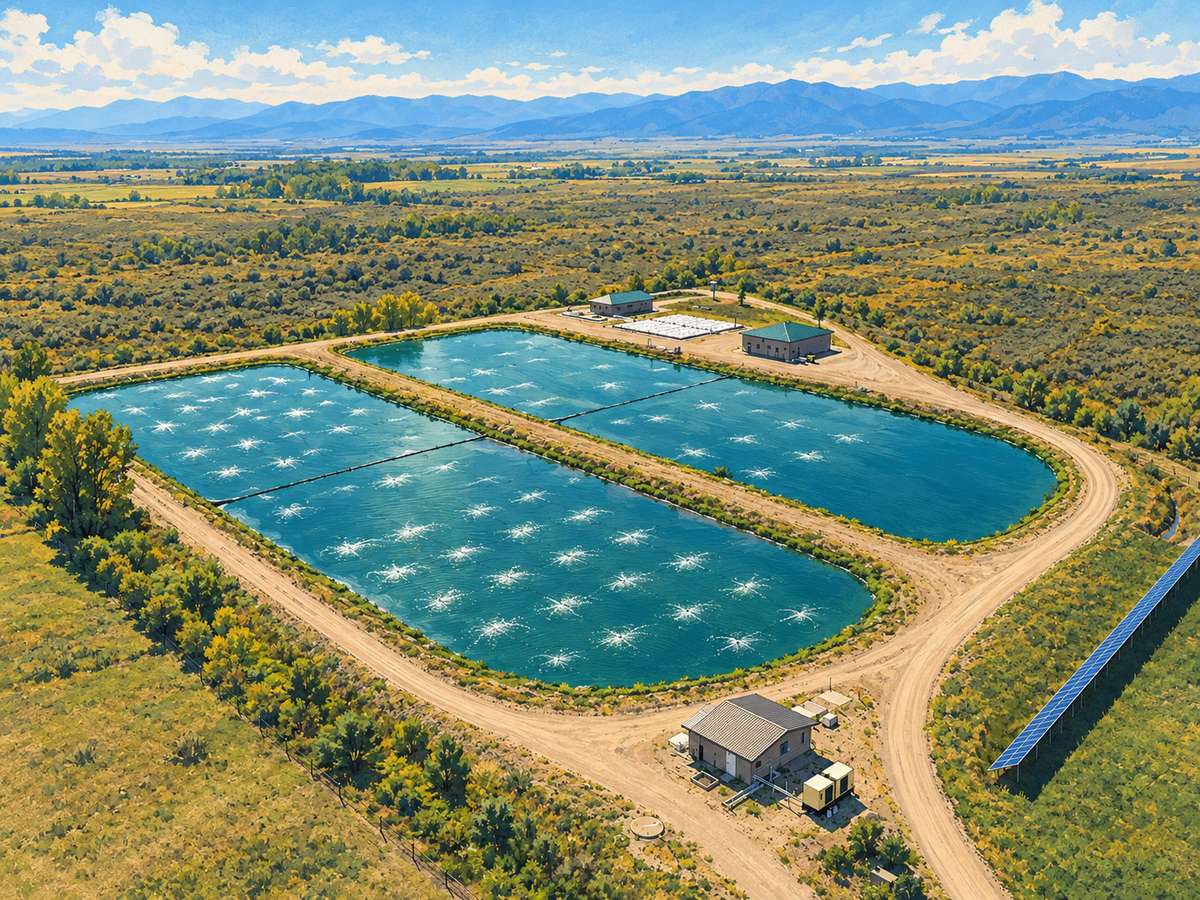
DRIGGS — Driggs is borrowing $25 million to rebuild its wastewater treatment plant without a bond election. The Driggs City Council adopted Resolution 421-24 on Sept. 3, 2024, authorizing outside counsel to file for judicial confirmation in district court. A confirmed judgment is the city's legal authority to take on the debt.
Idaho's Board of Environmental Quality adopts the final fiscal-year 2027 Clean Water State Revolving Fund priority list on June 1, locking in a $25 million SRF loan for the Driggs wastewater rebuild, with $6.34 million of principal forgiven and $18.66 million repayable over 30 years at 2.5%. The Signal's separate explainer, What ARPA, IIJA, and FEMA Paid for in the Driggs Wastewater Rebuild, covers which federal programs are inside that package.
Two ways an Idaho city borrows
Idaho cities have two ways to finance major infrastructure.
The first is a general-obligation bond, secured by a pledge of the city's property-tax authority. The Idaho Constitution at Article VIII § 3 requires two-thirds of voters to approve GO debt at an election. Voters call this a bond vote.
The second is a revenue bond or revenue-pledged loan, secured by an enterprise fund's user-fee revenues, such as sewer and water rates. Article VIII § 3 contains an exception for "ordinary and necessary expenses" of the city, and Idaho courts have held that revenue-pledged debt for the upkeep of an existing utility falls inside the exception. Cities file a petition under the Idaho Judicial Confirmation Law, Idaho Code § 7-1304, asking a state district court to confirm by judgment, after public notice and hearing, that the proposed borrowing is an ordinary and necessary expense and that the city has lawful authority to incur it. The court's judgment is the city's legal authority to borrow.
Driggs took the judicial-confirmation route. Victor filed a similar petition regarding its wastewater project, but Victor's case has not yet resulted in a final order. Judge Steven Boyce opened Victor's confirmation hearing in April 2025; a status conference is set for June 2026, and a three-day confirmation hearing is scheduled for September. Both cities chose judicial confirmation over a bond vote.
What Driggs filed
The procedural record of the Driggs wastewater financing is on the city's books and in the district court.
The Aug. 20, 2024, public hearing. The council met the 15-day published-notice requirement and opened a public hearing on whether to authorize a judicial-confirmation petition for up to $25 million in Driggs wastewater financing. Rick Miller of Altura Solutions, the city's financial advisor, told the council the mechanism "would allow the city to borrow funds with a judge's review instead of taking it to the voters."
One member of the public spoke. Resident Robert Boyles opposed the path. He told the council, "the voters should have the ability to make this decision," that he felt "the Council doesn't want to hear from them," and that voters should be able to tell the U.S. Environmental Protection Agency, which holds Driggs under a January 2025 federal consent decree to rebuild the plant, "to drop dead." The hearing closed two minutes after it opened, at 6:24 p.m., with no other comment.
Sept. 3, 2024: Resolution 421-24. Boyles returned during community input and again asked the council to put the financing to a vote. The council adopted Resolution 421-24 the same evening on a 3-0 roll-call vote: Council President Miles Knowles, Council Member Jason Popilsky, and Council Member Jennifer Bragg in favor, Council Member Allison Michalski absent for the item.
The resolution authorized two alternative funding instruments under a single judicial confirmation, a loan agreement or the sale of revenue bonds on the public market, so one court order would cover whichever the city used. It also directed the Boise law firm MSBT Law, Chartered, to file the city's confirmation petition in the Seventh Judicial District Court, in and for Teton County.
Before a court will confirm a borrowing, the city must show that the debt is an "ordinary and necessary expense" within the meaning of Article VIII § 3. Resolution 421-24 records the council's five grounds:
- it protects the public health and safety;
- it upgrades an existing service rather than launching a new endeavor;
- general state law authorizes the project;
- the city has long operated the system and finds the rebuild indispensable; and
- the cost is not grossly disproportionate to the city's overall budget.
A confirmed judgment is a backstop. It permits borrowing without requiring it. Whether Driggs issues debt, and how much, depends on the funding structure the city accepts.
The funding source is now the State Revolving Fund. "If we get the funding, we wouldn't need the bond," Mayor August Christensen told Teton Valley News in April. The "bond" in her quote refers to a revenue bond issuance in the public market, the alternative path the resolution preserved. The SRF loan replaces it. Both paths are revenue-pledged debt, and both rest on the same 2024 judicial confirmation. The SRF path costs less: lower interest than a public-market issuance for a small Idaho municipality, principal forgiveness for disadvantaged communities, and reimbursable disbursements, where DEQ pays as work is completed rather than fronting cash.
What ratepayers pay
Driggs sewer customers pay for the rebuild, whether the city borrows through a bond election or a state revolving fund loan. Residents now pay $109.56 a month for sewer service. At the Sept. 3 meeting, when Council Member Bragg asked to see the city's most recent rate study, Finance Officer Carol Lenz said the last one was from approximately 2021. Driggs has not published a forward rate projection under the SRF structure.
The Driggs wastewater project's most recent published cost estimate is $31.7 million, from Forsgren Associates' 60% design presented to the council in March 2025. That estimate covered a plant serving both Driggs and Victor; Victor's council voted three days later to build its own facility, and Forsgren has been redesigning for a single-city plant since. Against that figure, the $25 million package leaves roughly $6.7 million unfunded, and any remaining gap falls to ratepayers. A revised single-city estimate is expected to arrive with Forsgren's June 2 presentation. The city has not signaled its direction or magnitude.
Judicial confirmation is legal, and Victor is pursuing the same route for its own plant. A bond election would have asked Driggs voters to approve the debt; judicial confirmation instead asks a district judge. Driggs residents whose monthly sewer payments will retire the SRF loan have not seen what those payments become.
What to watch
- May 18, 2026: Public comment closes on the Idaho DEQ draft fiscal-year 2027 Clean Water State Revolving Fund priority list.
- June 1, 2026 (approximate): The Idaho Board of Environmental Quality adopts the final priority list.
- June 2, 2026: Driggs City Council receives Forsgren Associates' 60% design presentation and a revised single-city cost estimate.
- No measure on the certified May 19, 2026, primary ballot or filed for the November 2026 general election as of publication.
Sources
- Idaho Code § 7-1304 — Judicial Confirmation Law
- Idaho Code § 7-1306 — published-notice requirement for the public hearing
- Idaho Constitution Article VIII, § 3
- City of Driggs Resolution 421-24 (Sept. 3, 2024)
- Driggs City Council Minutes, Aug. 20, 2024
- Driggs City Council Minutes, Sept. 3, 2024
- Idaho DEQ Draft FY2027 Clean Water SRF Intended Use Plan
- Teton Valley News, "Driggs ranks #1 for state wastewater funding"
- City of Driggs Wastewater Treatment Plant project page
- Victor v. Driggs: Inside Teton Valley's $65 Million Wastewater Breakdown
Updated May 14, 2026 to tighten accuracy around published estimates.
Subscribe
The Morning Signal
Teton Valley news, once or twice a week. The reporting is airtight. The introduction is unhinged.