After a Year and a Half, Driggs Puts Its Consent for 576 Victor Units in Writing
Driggs gave Victor written consent for sewer connections serving 576 units, then let its public works director approve the next ones without a vote.

·
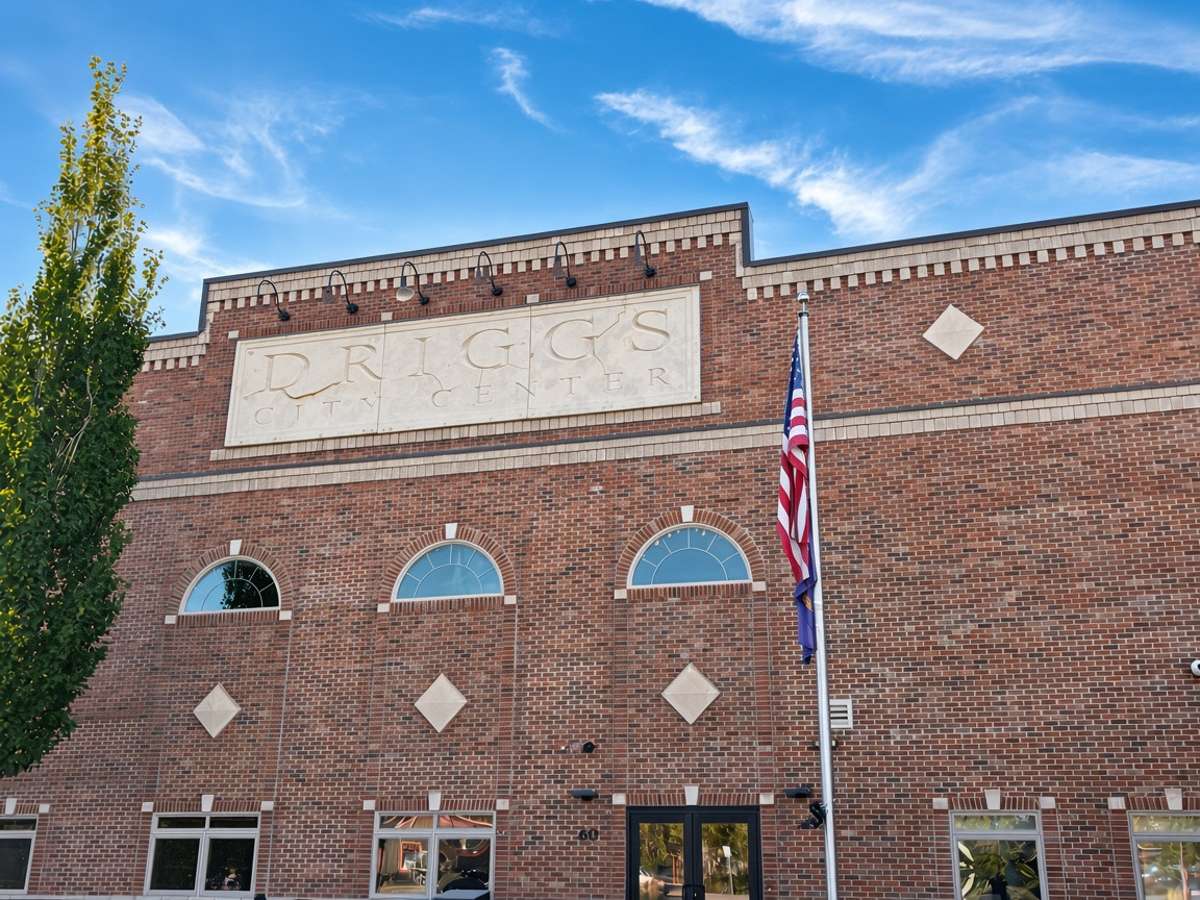
DRIGGS — The Driggs City Council voted 3-0 Tuesday to give Victor written consent for sewer connections serving 576 units, more than a year and a half after Victor first asked for it. Council member Sarah Johnston then told the public works director he could approve the next requests himself, up to 50 equivalent residential units at a time. She asked the other two members whether they agreed, and the council agreed without an official vote.
The largest single development seeking connection consent is Victor's affordable housing project. Sherman Park is four buildings and 90 units at Agate Avenue and Baseline Road, with 55 restricted for workforce housing, on a parcel the city owned when it approved the plan. Victor's Planning & Zoning Commission approved the site plan in July 2024, and the rezoning ordinance allowing it was recorded that same month. The will-serve letter for the sewer is dated March 11, 2025.
The 2011 inter-city agreement governing the treatment plant the two cities share requires written consent. Section 5 says any single connection of more than ten equivalent residential units, inside or outside either city's limits, "shall be made only with the express written consent of both cities, which consent shall not be unreasonably withheld."
Walking both councils through the clause at a joint session on September 16, Public Works Director Jay Mazalewski said the first request he had seen came from Victor in February 2025. "At least I had never seen any in the 10 years that I've been there."
Asked what had happened before that, he answered: "Connections were made."
Asked whether connections had been "talked about, they just were never ever like put into writing," he said it had gone both ways. "Sometimes, sometimes not. It was very fluid, and there wasn't any specific criteria, so we weren't necessarily following with a written consent."
"It's not clearly defined. It doesn't have when it's needed. At what step? Who approves it? Who issues this connection consent? Is this the city council? Is it staff? Is it administrative? What's that process to go through? And there's no decision criteria associated with this connection consent."
Five weeks later, Driggs brought up the request again. Before the motion, Mazalewski told the council more were coming: "We have others that are out there that Victor will be continuing to send us." Council member Miles Knowles asked about the clause itself. "Jay, if we were to move forward with a memo essentially waiving the connections clause of the contract, does that impact you?"
"No, because we haven't been doing it historically," Mazalewski said.
After the motion was seconded, Johnston asked him where the line should fall "for an administrative approval versus it coming to council."
"I really like the idea of waiving the whole thing," Mayor August Christensen said. "I mean, we're going to be moving forward with a different agreement. So whatever type of an agreement is, do we want to let this bog us down?"
"If I could get a general direction on if administrative approved up to a certain level, I'm fine with that," Mazalewski said. "I'd like to have that direction while we work with Victor. … I don't want the delay that we're seeing here."
"Do you think 50 is a reasonable threshold?" Johnston asked.
"Sure," Mazalewski said.
"For lack of something different?" she said.
"Should I make this an official motion?" Johnston asked.
"Right," Christensen said. "It wouldn't be a motion."
Knowles was "on the side of just waiving the whole thing" too. Approving the connections and then building a procedure around the requirement meant "approving something that we haven't been doing in practice, and then also creating a process to where we should be asking them for approval," and that would throw up "just more delays." Relations between the two cities "haven't exactly been easy over the past few years." It was "just another thing that could hold things up or cause problems."
The consent requirement was "like a tiny drop in the bucket," Christensen said, next to "how 2 cities deal with all sorts of things about a wastewater treatment plant." The prospect of "having different types of an agreement where everything has to go between 2 whole different deciding bodies" made her think the same way. "We're just dealing with one little tiny part."
Johnston said she "would like to add that maybe instead of just a complete mutual waiver … instead of consent to connect, it would just be notification of any will serves that either city issue in excess of 10 ERUs get forwarded to the other city. And that's what had been happening historically. So to me, that seems like a very reasonable thing to keep doing, but just to have a mutual written memo of understanding that we both sign waiving the consent to connect and replace it with just to keep each other in the loop about the connections." Turning to Mazalewski, she said that "if Victor's not amenable to that, or if it's taking time, I believe we should absolutely respond to these with more speed than we have these ones in front of us today." To that end she was "totally comfortable with you administratively approving anything between 10 and 50 ERUs, and then bringing anything over 50 to council."
Christensen kept it out of the vote. "That was a separate conversation. We're just voting on this."
Earlier in the discussion, Johnston had asked how many more upstream units could connect before the south lift station that carries all of Victor's flows runs out of capacity.
"I'm digesting that question," Mazalewski said. "Do we know how many? Not specifically." He went on to explain that capacity is judged against the highest flow on the busiest day, which he called "really a theoretical number." Flows expand and contract throughout the year due to weather and population changes. On average, the city's modeling shows room for "500+ units."
When Driggs City Council tabled the discussion about providing the written consent required by the 2011 agreement, it was partly because the city's planning study put the remaining capacity at 32 equivalent residential units. Peak flows were already at 98% of what the pumps can move. Engineers use peak capacity to provide cities enough time to perform infrastructure updates before actual capacity becomes an issue.
Tuesday's staff report quotes a Keller Associates review of two years of flow data. The peak-day model had been overstating the flow by about 100,000 gallons a day, "which is why the initial model results were not consistent with your observations." The concern "is not as immediate as we initially thought," the firm wrote, though the station "is certainly still a lift station to monitor and it is approaching capacity."
Idaho requires a lift station's firm capacity to exceed peak hour flow. South clears that bar pumping alone, Keller wrote, but "it is not met when either Creekside or Main LS are on at the same time. For this reason, improvements should be started soon." Keller's final memo has not reached the city, so the staff report quotes an email summary of it.
Johnston had opened the discussion by turning the requirement around. "Is Driggs now making reciprocal requests to Victor?" Driggs had not been doing that, Mazalewski said, and he put the question back to the council. "Would council like us to start doing that?"
At the joint session in September, he had called the reach of the requirement "a very nebulous area." The clause "says that consent to connect should be for the trunk line or any connections within the city limits. So, anywhere … It includes all collection systems." Asked whether that meant all of Driggs and all of Victor, he said: "Any 10 units or more, yes."
Of the agreement as a whole, he said: "Its adherence to it has been cherry-picked is the best way to put it. It hasn't been followed to a T … the cities haven't necessarily adhered to the current agreement in multiple different spots."
Driggs took up a second undocumented connection the same night. Teton County's transfer station has been on the city sewer since the mid-2000s, and the city has now been asked to issue a will-serve letter for it because, in staff's words, "neither the city or the county could locate a Will-Serve from the original facility." Driggs would be issuing that letter to the county, not asking Victor for anything.
What to watch: Victor's council voted on October 14 to continue a land use application to December 9, "to allow time to resolve the consent to connect letters from the city of Driggs."
Free newsletter
The Morning Signal
Teton Valley news, once or twice a week. The reporting is airtight. The introduction is unhinged.
Free. Unsubscribe anytime.
Sources for this story
- Driggs Public Works staff report, Victor Connections Ratification, October 20, 2026
- Driggs City Council agenda, October 20, 2026
- Driggs Public Works staff report, Will Serve Request for Teton County Transfer Station, October 20, 2026
- City of Driggs Wastewater Collection Facility Planning Study, December 2025
- Driggs Public Works staff report, Victor Connections Ratification, August 2026
- Victor P&Z findings, BP2024-05 Site Plan and Design Review, Sherman Park Affordable Housing, July 17, 2024
- Victor Ordinance O608, rezone to Commercial Mixed Use, recorded July 29, 2024
- Victor notice of decision, SD2024-09 Sherman Park lot split, June 30, 2025
- Driggs City Council meetings and agendas
- Both Cities Stopped Planning to Fix the Driggs Lift Station That Carries Victor's Sewage
- Victor and Driggs Hand Their Wastewater Agreement to an Outside Facilitator
- Victor Drops Its Driggs Lawsuit and Its Bid to Build Its Own Plant